Sunday, August 31, 2008

Contemporary Style House with a Rooftop Terrace in Mount Baker, Seattle

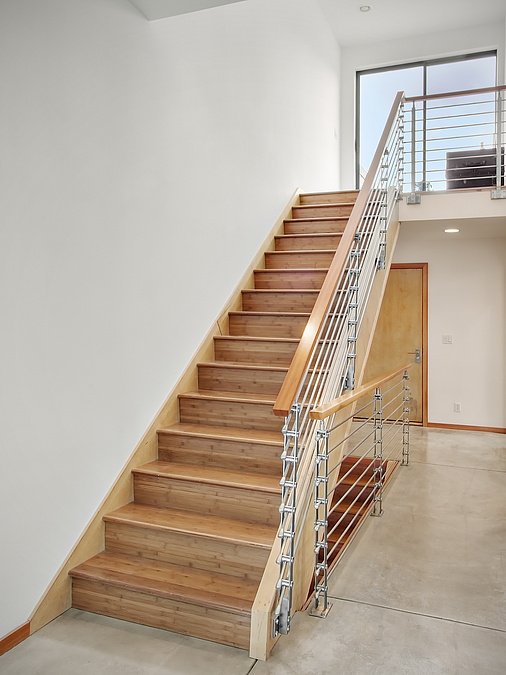
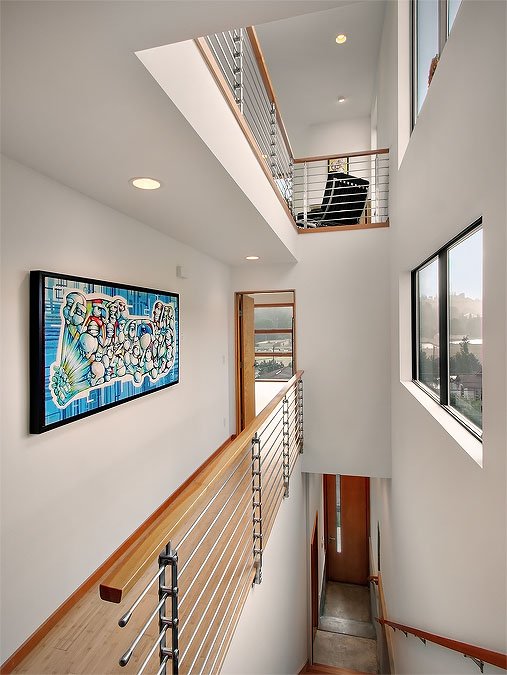
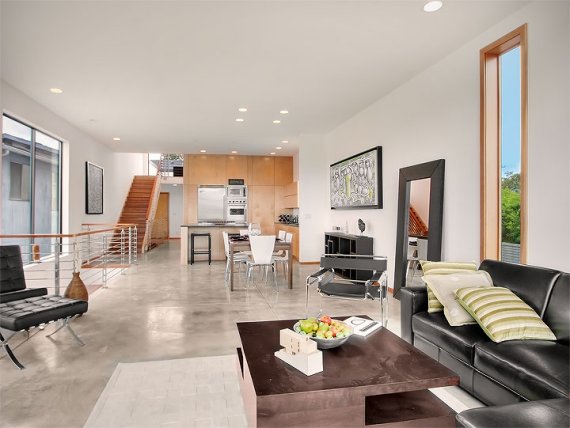
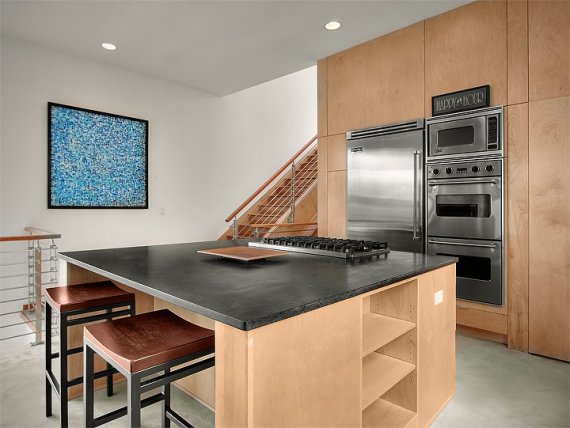
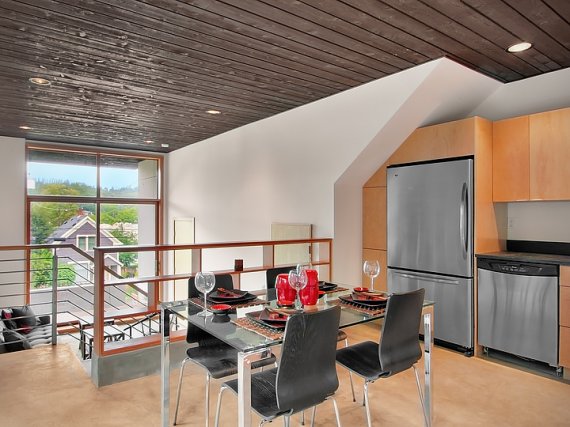
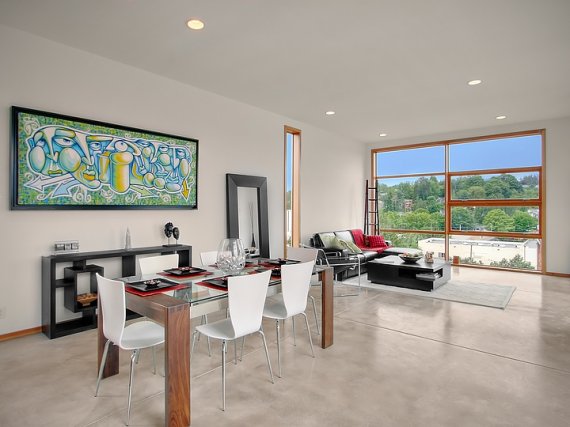
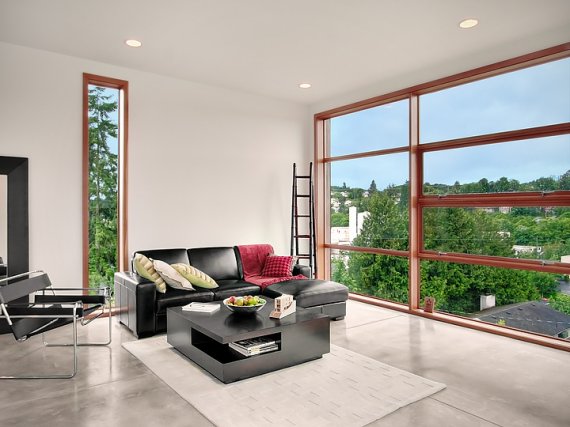
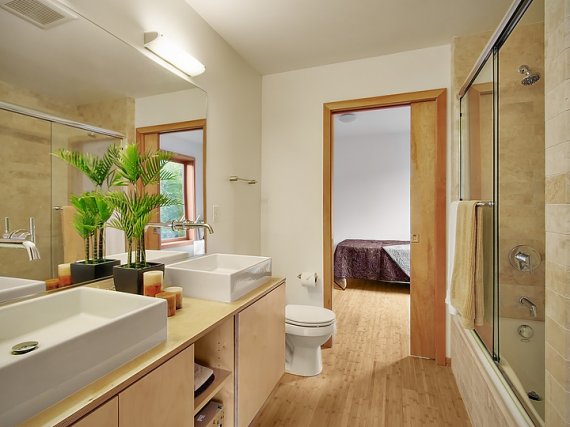
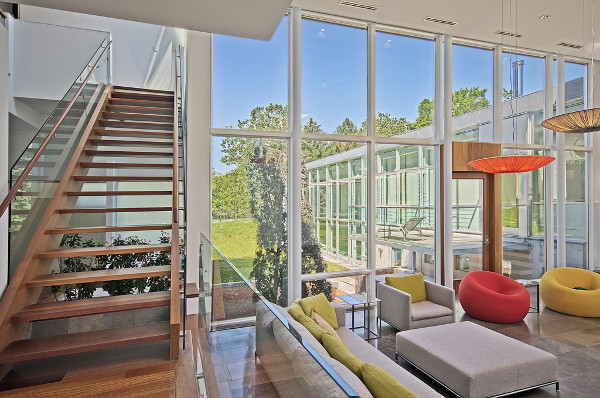
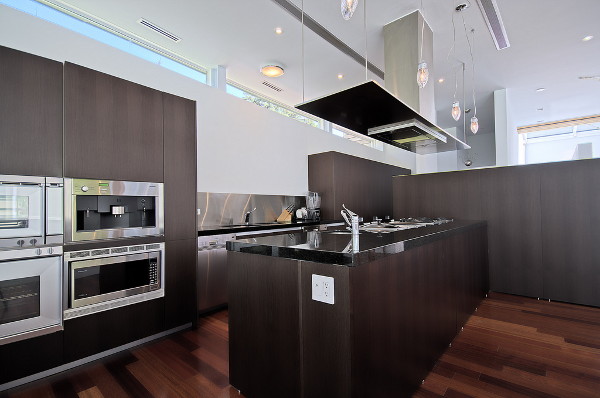
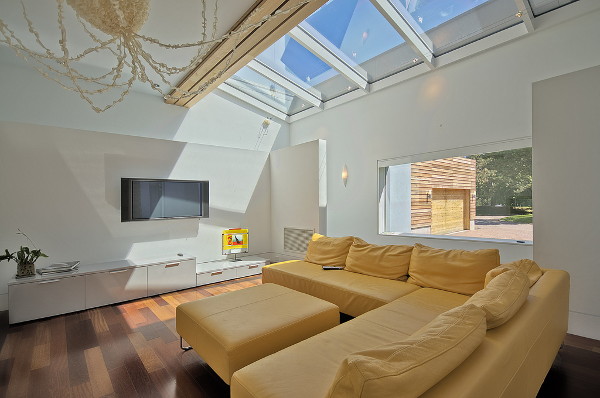
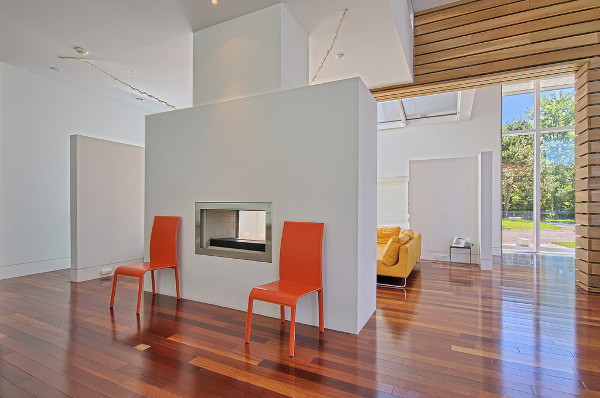
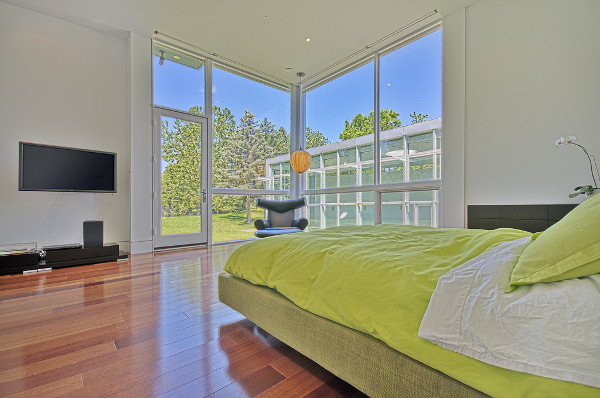
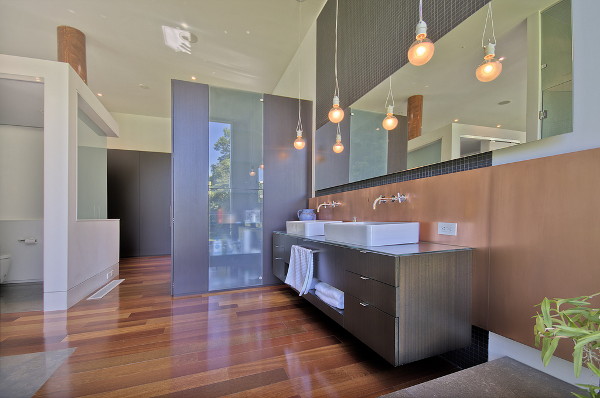
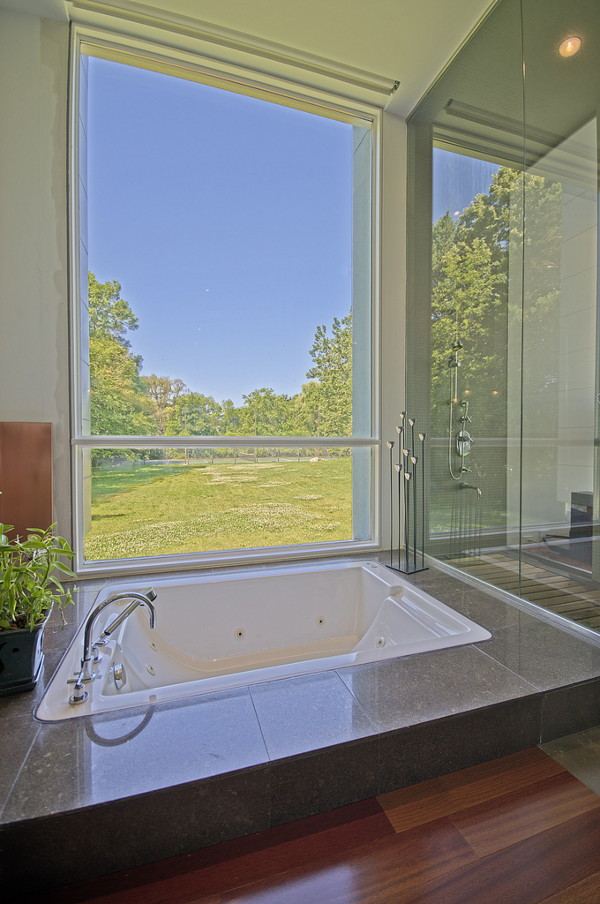
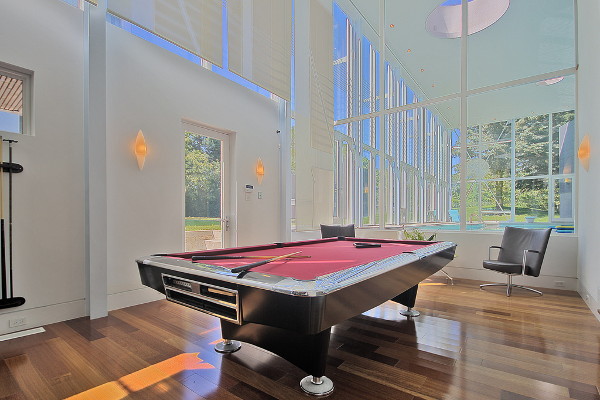
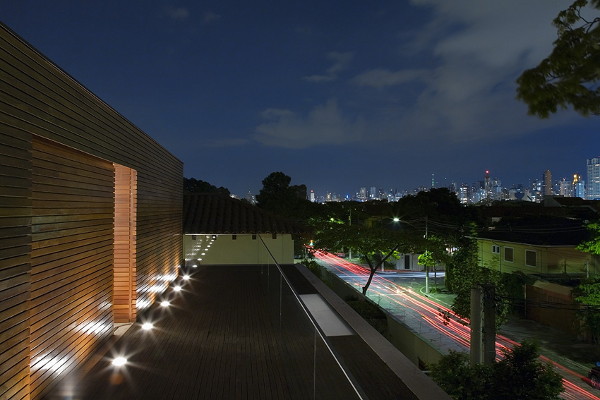
Boasting sweeping views of downtown Seattle from its 400-sq.-ft. rooftop terrace, Mount Baker House by pb Elemental Architecture embraces the outdoors in its warm, woody, nature-inspired contemporary design. The house strong vertical presence features a facade of windows wrapped in cedar, cement, concrete and marine plywood. Inside, the home’s 2,470-sq.-ft. of living space features four bedrooms, 2.5 baths and an open-concept living area conducive to entertaining or relaxing in luxury style. Spaces are simple, Zen-like, with the expansive floor-to-ceiling windows as their main focal point. The home's upper level features 12-ft. ceilings with floor-to-ceiling windows that create large, light-filled spaces housing the kitchen, living room and dining room. The lower level features a separate apartment of 635 sq. ft., complete with its own wrap-around patio. pb Elemental Architecture.
mount-baker-residence-1.jpg
mount-baker-residence-10.jpg

mount-baker-residence-5.jpg
mount-baker-residence-2.jpg
mount-baker-residence-3.jpg
mount-baker-residence-4.jpg
mount-baker-residence-6.jpg
mount-baker-residence-7.jpg
mount-baker-residence-8.jpg
mount-baker-residence-9.jpg

Contemporary Prefab Cellophane House Exhibit at MoMA

cellophane-house-1.jpg

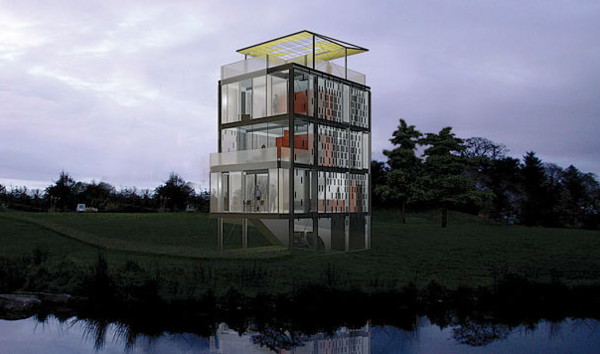
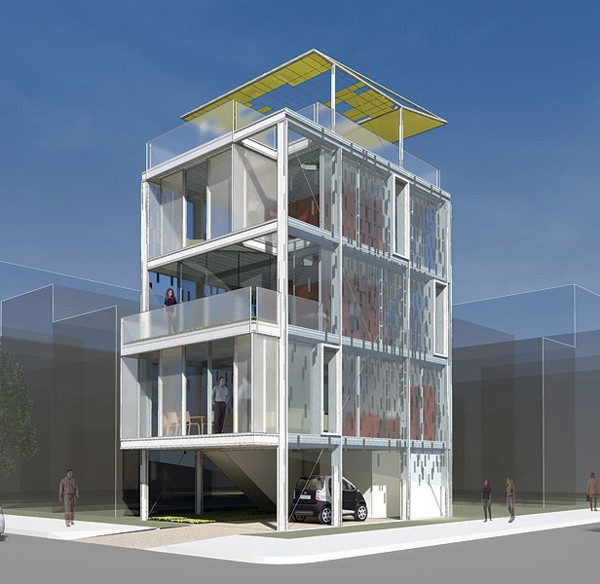
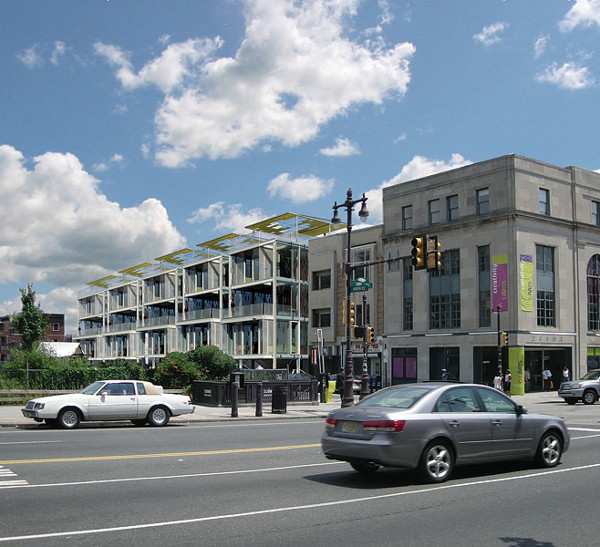
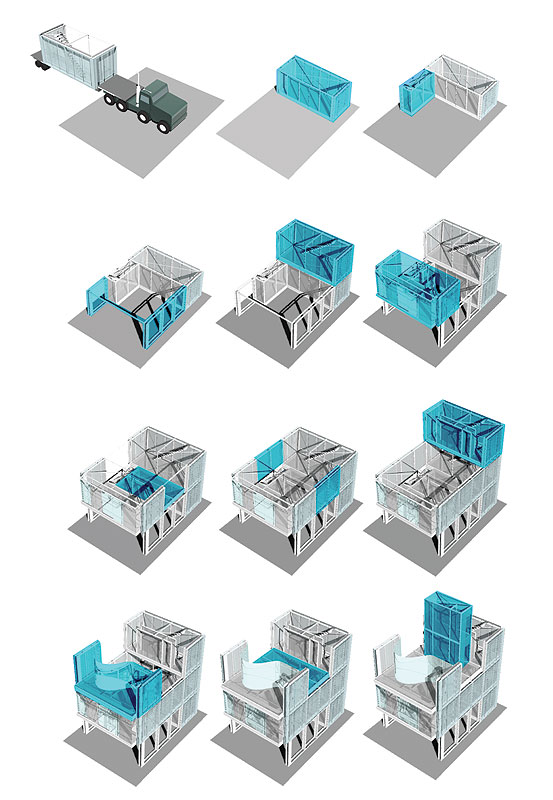
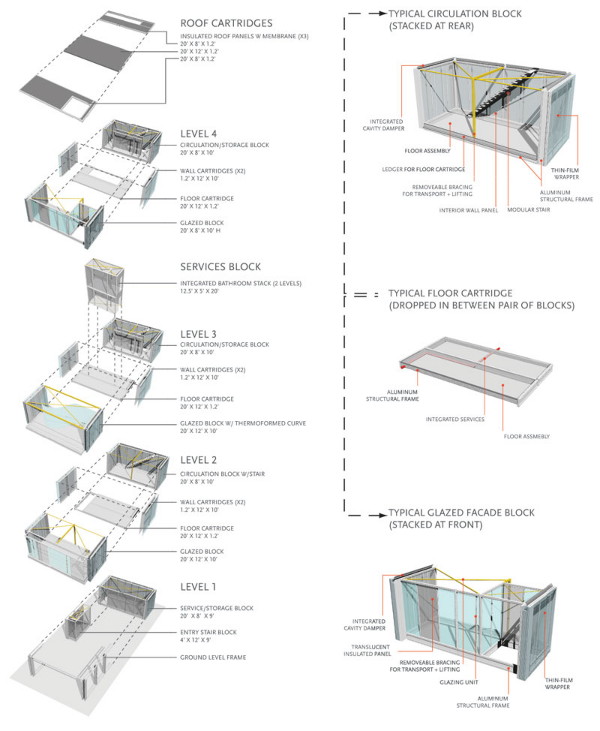
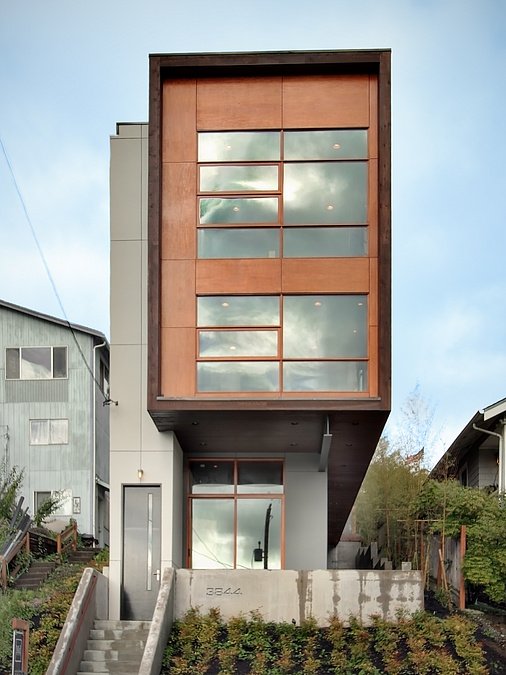
It’s clear why the Cellophane House is garnering so much attention. Designed by the innovative architects at KieranTimberlake Associates and on display at New York’s Museum of Modern Art until October 20, 2008, this single-family, 1,800-sq.-ft., four-storey structure is much more than just a house. Based on the notion that a building is “nothing more than an assemblage of materials forming an enclosure,” according to KieranTimberlake Associates, the Cellophane House does not make any claims of permanence. Rather, this modern design is a temporary place to keep your stuff, to put it simply. Built from an unlimited palette of off-the-shelf materials, this customizable, prefab house is easily modified to any site conditions, any style preferences, and any budget. The idea is that these individual building blocks, once they’ve served their purpose, can be dismantled and repurposed. The Cellophane House features four bedrooms, two bathrooms, a living and dining area, a rooftop terrace and a car port.
cellophane-house-2.jpg
cellophane-house-3.jpg
cellophane-house-4.jpg
cellophane-house-5.jpg

Saturday, August 30, 2008

Eco-Friendly Mountain Cabin on Wildcat Ridge in Aspen - extreme design

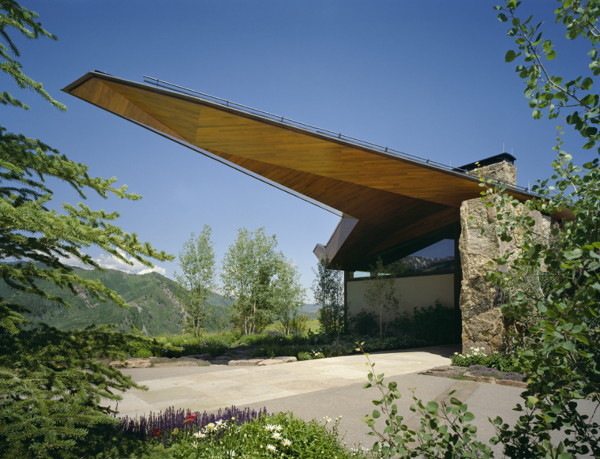
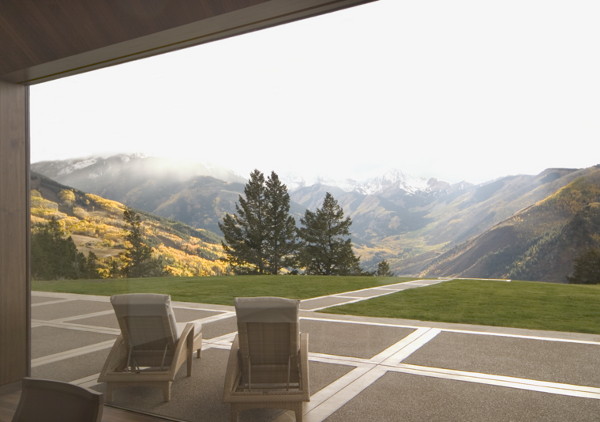
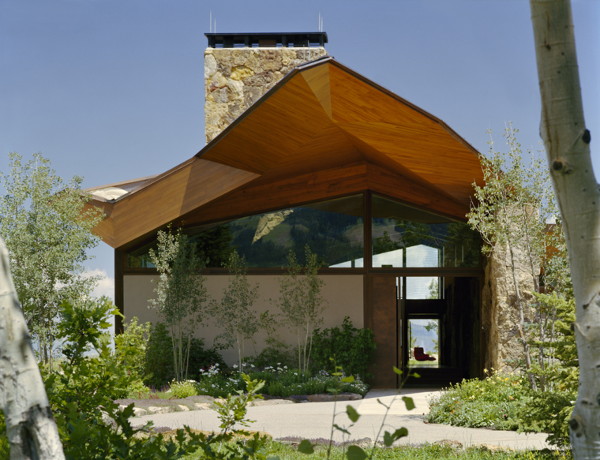
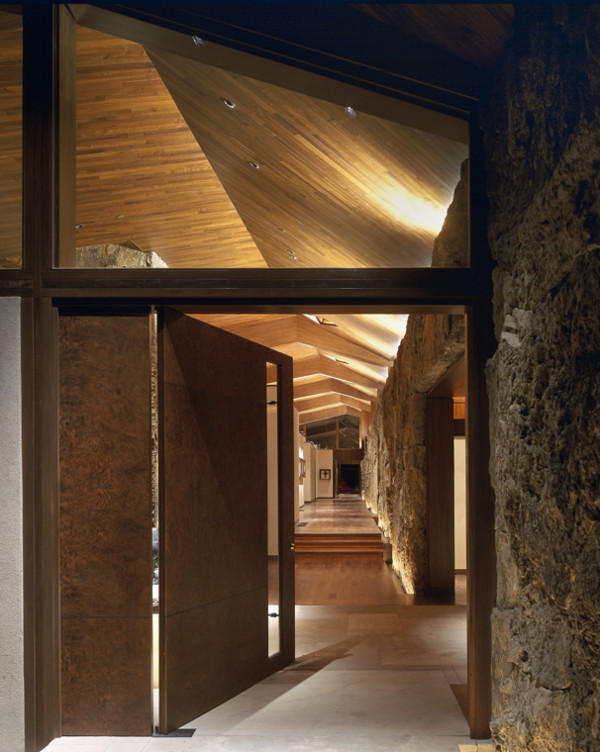
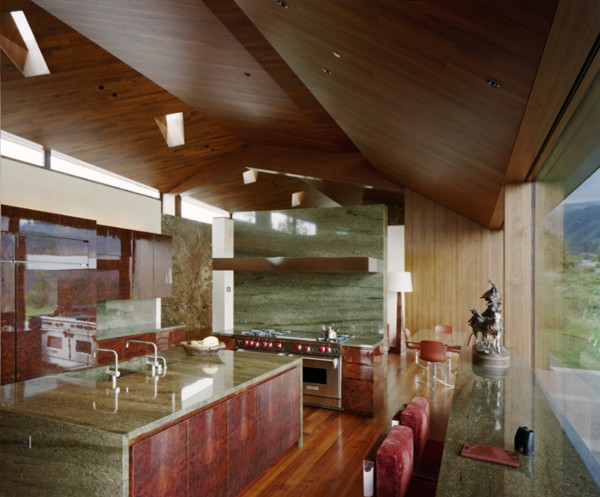
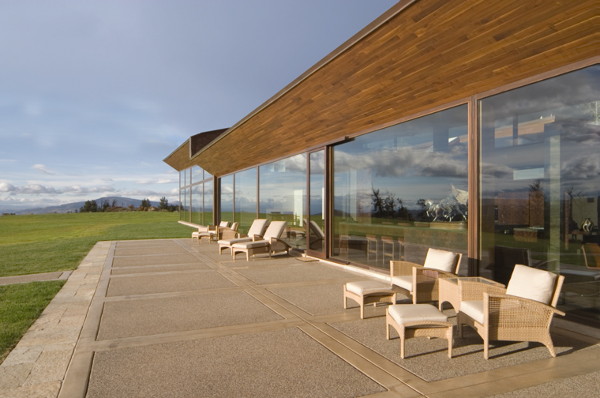
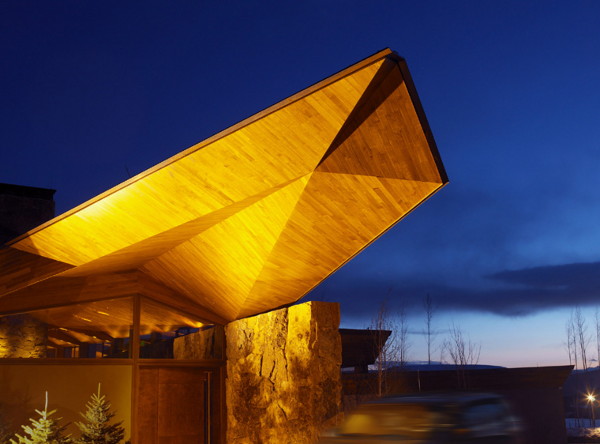
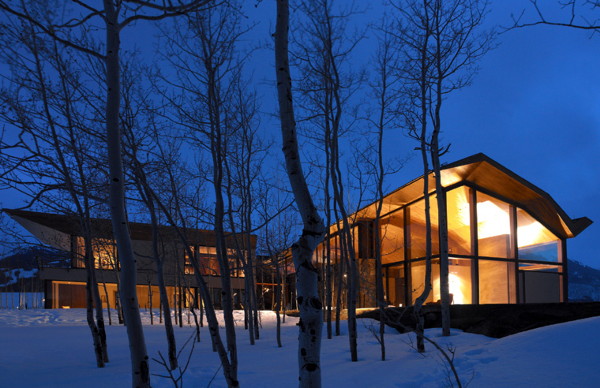
Perilously perched at an elevation of 9,200 ft. in Aspen, Colorado, this mountain cabin design is extreme in every respect, from its location to its views and its look, both inside and out. According to Voorsanger Architects PC, this contemporary cabin design responds to its natural surroundings in three ways – the unique folded roof; an expansive rock wall the divides east wing and west; and the seemingly infinite glass walls that provide for panoramic views without any interruptions, or distractions. With a length of 200 ft., this rustic-looking cabin stretches along Wildcat Ridge, with the mountain peaks rising just outside the windows. This home takes on a distinctly “mountain chalet” persona, only on a much grander scale that what one might expect. The warm woods and rugged rock of the surrounding environment make their way into the house. But the Earth does more than just influence this home’s look and feel, it also powers the house through 60 renewable geothermal wells that heat the driveway, pool and home, independently of other power sources. Voorsanger Architects PC.
aspen-house-1.jpg
aspen-house-7.jpg
aspen-house-2.jpg
aspen-house-3.jpg
aspen-house-4.JPG
aspen-house-5.jpg
aspen-house-6.JPG
aspen-house-8.jpg
aspen-house-9.jpg
aspen-house-10.jpg

Friday, August 29, 2008

Luxury Contemporary Home in Toronto, Canada, for sale

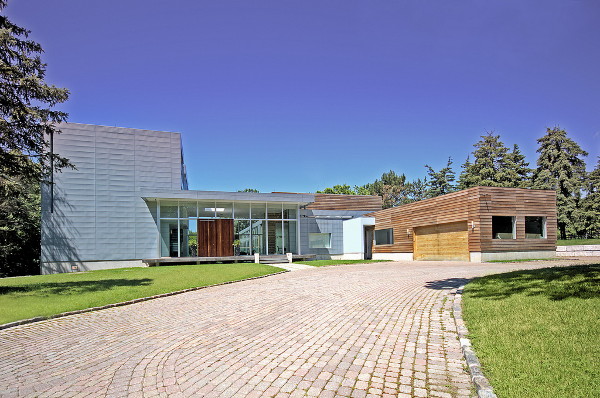
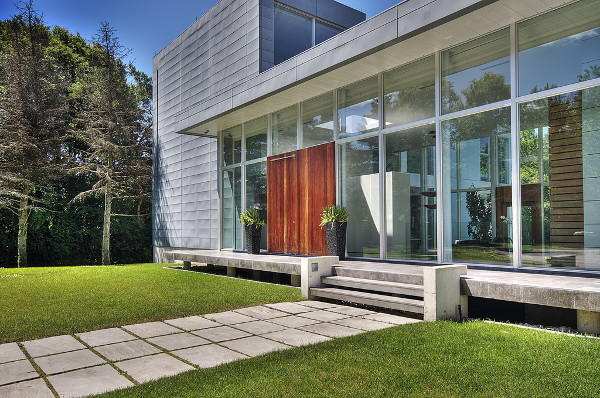
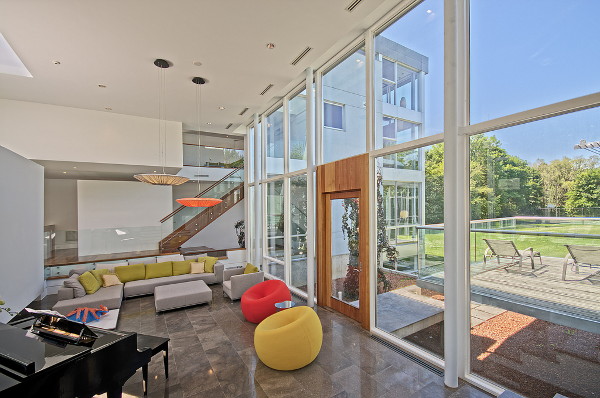
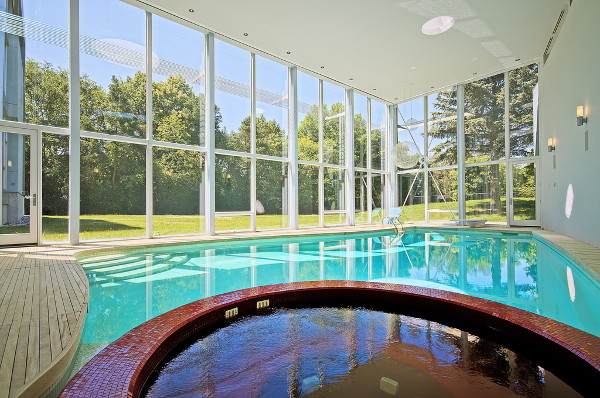
This magnificent contemporary home in Toronto, Canada, sits quietly in the upscale neighborhood known as the Bridlepath. This luxury and spacious design by home builder, architectural firm and design company TAS DesignBuild is a work of art in every aspect. The home’s 18,000 sq. ft. of open-concept living space is occupied by five bedrooms and 10 baths, so whether you enjoy entertaining large groups of guests, or would like to sleep in a different bedroom every weeknight, you’re covered. While the home’s street side is covered for privacy purposes, the home exterior is largely covered by windows for interiors bathed in natural light. Throughout this contemporary house, large panes of glass and thoughtfully placed skylights ensure every detail is illuminated. And with details like these, you’ll want to highlight every last one, from the rich wood and gleaming marble floors, to the simple lines inside that bring a modern, minimalist feel to this larger-then-life design. With every comfort at your fingertips – including a glass-enclosed indoor pool, a games room and outdoor tennis courts – it’s plain to see why here, home is where the heart is. This luxury house is currently listed at $10,800,000 via Prestige Living
83-bridle-path-house-1.jpg
83-bridle-path-house-2.jpg
83-bridle-path-house-3.jpg
83-bridle-path-house-4.jpg
83-bridle-path-house-5.jpg
83-bridle-path-house-6.jpg
83-bridle-path-house-7.jpg
83-bridle-path-house-8.jpg
83-bridle-path-house-9.jpg
83-bridle-path-house-10.jpg
83-bridle-path-house-11.jpg
83-bridle-path-house-12.jpg
83-bridle-path-house-13.jpg

Thursday, August 28, 2008

Luxury "Cave" House by Architect Marcio Kogan

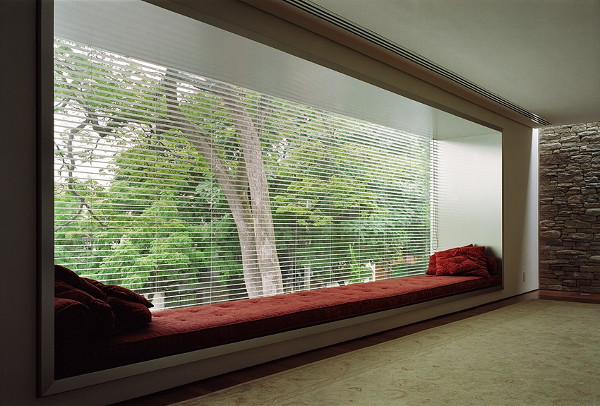
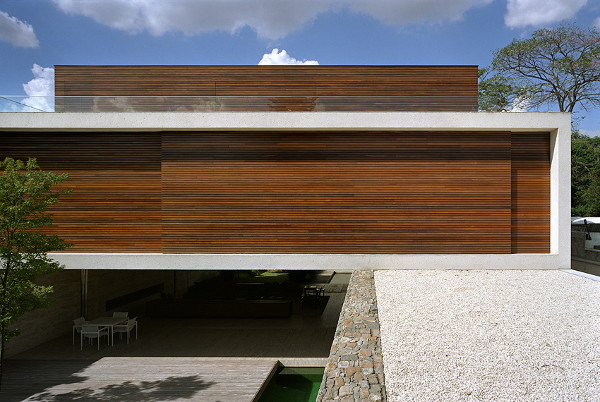
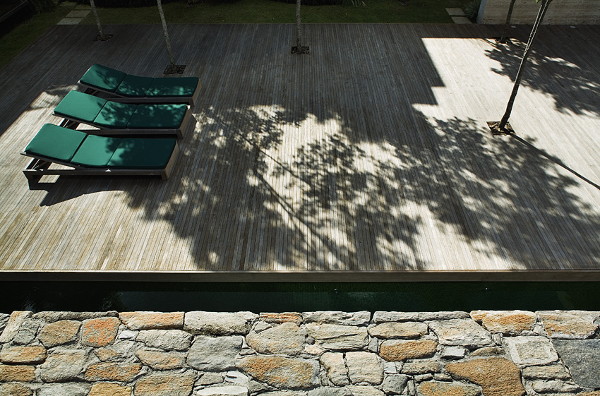
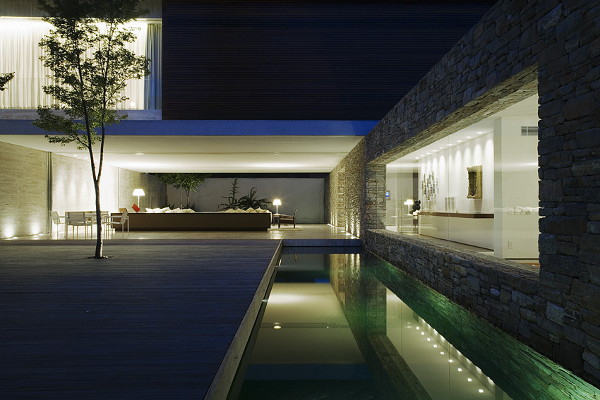
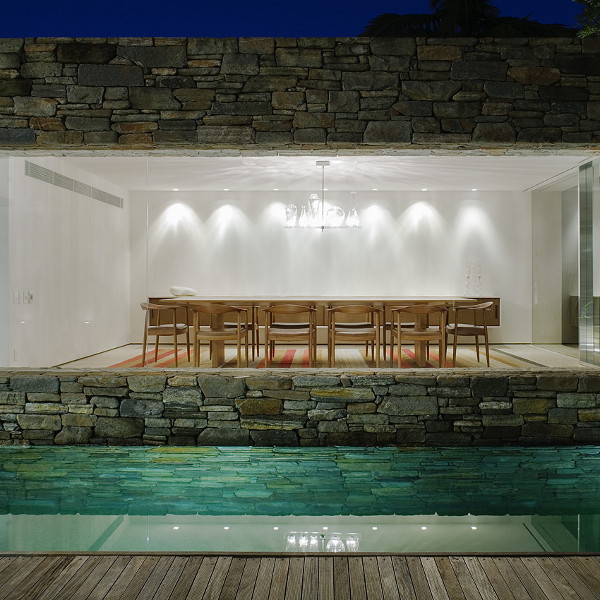
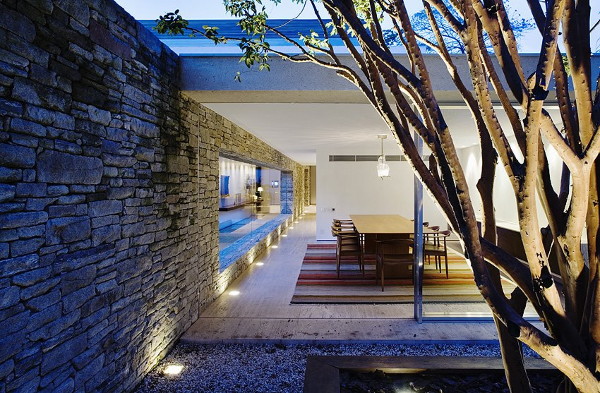
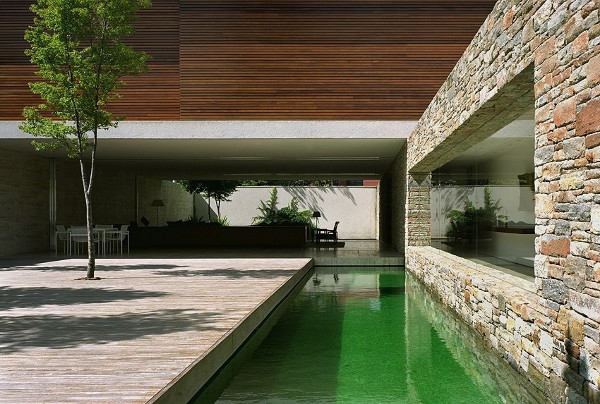
Layers of warm Brazilian hardwood, stone and concrete edge their way up Mirindiba House – one of the latest contemporary architectural artworks designed by Brazil’s Marcio Kogan. This luxury home low profile boasts covered and open living spaces, embracing the outdoors as an important component of the home’s plan. Large spans of glass form pillarless windows that open seamlessly into the outdoors. An elongated pool stretches along the deck and past the sauna, under the open sky, and flows into a “cave” that houses a cool, shady outdoor living room. Concealed in the far wall, sliding glass windows can be pulled across to close off this living space from the elements. This favorite living and lounging spot lures residents and guests deeper into the house, through a formal dining room and into the far reaches of the kitchen, tucked off the main corridor. Upstairs, the bedrooms and their accompanying ensuites, and the master bedroom with his and hers walk-in closets, complete the upper floor. The piece de resistance is found topping this luxurious yet hospitable home – the cinema room, encased in hardwood and boasting magnificent views of the city at your feet. Marcio Kogan
via Modern Residential Designs
mirindiba-house-1.jpg
mirindiba-house-4.jpg
mirindiba-house-2.jpg
mirindiba-house-3.jpg
mirindiba-house-5.jpg
mirindiba-house-6.jpg
mirindiba-house-7.jpg
mirindiba-house-8.jpg

Wednesday, August 27, 2008

Innovative Bamboo House in Taiwan by ROEWUarchitecture

Like a gilded cage for the nature lover, this modern bamboo house sits in a dense urban district of Eastern Taiwan, where neighboring houses employ metal cages on windows and doors to address the issue of security. Fresh and forward-thinking UK-based ROWEUarchitecture created an innovative, intricate, sculptural bamboo enclosure that brings beauty to function. Sunlight passes between the bamboo bars, casting shadows on interiors that move as the sun journeys across the sky. In the heat of the day – or night – the rooftop deck is a calm refuge that invites cool breezes and company. ROWEUarchitecture
via World Architecture News
roewu-architecture-bamboo-house-1.jpg
roewu-architecture-bamboo-house-2.jpg
roewu-architecture-bamboo-house-3.jpg
roewu-architecture-bamboo-house-5.jpg

Tuesday, August 26, 2008

Mountain House Design in Valparaiso, Chile - Where Every Room Comes with a View

Now that is one sharp piece of work! Casa Altavista is a modern mountain house design by DA4 Architects that is daringly perched on a steep slope in Valparaiso, Chile. The sharply angular design creates two wing-like platforms that double the living space to include not just what's beneath the roof, but also on it. The rooftop terraces boast breathtaking views of the lush valley dropping down below. Large windows let sunlight spill over the honey-toned wood floors. But the centerpiece of every room is definitely the view, framed by the large showroom-style windows. DA4 Architects
via Contemporist
casa-altavista-1.jpg
casa-altavista-8.jpg
casa-altavista-2.jpg
casa-altavista-3.jpg
casa-altavista-4.jpg
casa-altavista-5.jpg
casa-altavista-6.jpg
casa-altavista-7.jpg

Monday, August 25, 2008

Contemporary Weekend House - Nature-Inspired Japanese Design

Stage House in Karuizawa, Japan, was designed to blend in with its woody surroundings. Created by Takei Nabeshima Architects (TNA architects), this modern, nature-inspired weekend house boasts as its main attraction an expansive glass wall that dissolves the boundary between indoors and out, affording panoramic views of world outside. The interior holds a surprise – an open-concept, three-tiered layout that places the bedroom, living room and kitchen side by side. As for details, there aren’t many. That’s the charm on this contemporary, nature-inspired house – the details are few, but they are quality. You’ll see it everywhere, from the innovative floor plan to the luxurious lacquered-wood floors and the staircase barely-there staircase leading up to the Juliet-style balcony above. TNA Architects
via Cube Me
stage-house-1.jpg
stage-house-2.jpg
stage-house-3.jpg
stage-house-4.jpg
stage-house-5.jpg

Sunday, August 24, 2008

Stylish Sustainable House in San Francisco

Designed by John Lum Architecture Inc., Casa Verde is an example of contemporary eco-conscious living that is as easy on the eyes as it is on the environment, proving that eco-friendly living need spare no luxury. Nestled a block from Garfield Park in San Francisco, California, the architect took an existing structure in an infill neighborhood, and Greened it up with high-tech sustainable features that puts wind power into action. A patio and spa welcome residents and guests into this modern house, opening onto a courtyard with a fountain and a wind turbine – one of the few you’ll find in the city, as part of a study testing the efficiency of wind power. The turbine generates between 1.6 and 1.9 kW, but with a hand from the sun via solar panels, that’s improved to 5 kW, powering this innovative 3,700-sq.-ft. house. Interiors are bright, funky and fashionable, blending an eclectic mix of bold color, varying textures and style that take the house from sophisticated to quirky and whimsical. Floors are made of FSC-certified or reclaimed wood. A set of glass stairs lead to the open-concept upper level, flooded with light via abundant windows. A green roof tops the design, incorporating a rainwater recycling system. All of the home’s appliances and ENERGY STAR certified, and 90 per cent of construction waste was recycled in the making of this gorgeous and sustainable house. John Lum Architecture Inc.
via Inhabitat
casa-verde-1.jpg
casa-verde-2.jpg
casa-verde-3.jpg
casa-verde-4.jpg
casa-verde-5.jpg
casa-verde-6.jpg
casa-verde-7.jpg
casa-verde-8.jpg
casa-verde-9.jpg
casa-verde-10.jpg
casa-verde-11.jpg

Saturday, August 23, 2008

Modern M House Designed for Privacy and Street Presence

“M” means many things in Almere, the Netherlands – modern, magnificent, Mark Koehler Architects and M House. The unique shape of this modern house design is as loved for its architectural interest and street presence as it is for the privacy it offers its residents. Designed by Amsterdam architect Marc Koehler, this unique home’s M shape also divides interiors in two defined wings. This modern design is deliberately closed off on the street side, while remaining wide open facing the private rear garden. Storefront-style windows on the main floor flood the home with natural light, revealing vibrant interiors finished with rich woods underfoot and high ceilings overhead. A kitchen, dining room, living room and office occupy the main floor, which opens to the garden out back, complete with a spacious deck and lounging area. Marc Koehler Architects
via Contemporist
m-house-1.jpg
m-house-2.jpg
m-house-3.jpg
m-house-4.jpg
m-house-5.jpg
m-house-6.jpg
m-house-7.jpg
m-house-8.jpg

Friday, August 22, 2008

Exotic Luxury House in Toronto, Canada - a contemporary palace?

This palatial house on the outskirts of Toronto, Canada, is defined by its eclectic mix of sophistication, elegance and the exotic. This futuristic luxury house geometric silhouette features a circular wing to the left and right of the main entrance, with a large circular window front and center. Inside, the window creates a bright entrance foyer, leading into the light-filled living areas. Interiors offer the most in modernity, echoing the exterior’s artistic, geometric flair. A grand staircase is the main-floor centerpiece, showcasing a cascading chandelier that draws the eye up. The home’s four bedrooms, 10 bathrooms and parking for 10 make a spectacular setting for entertaining. From the heated marble floors to the soaring ceiling, this home features luxury imported finishes and luxury details at every turn. Indoor waterfalls and a tropical conservatory housing exotic birds and plants transform this contemporary house into a retreat from the outside world. Located at 2400 Doulton, in Mississauga, this home is currently on the market at a price of $10,000,000, at Prestige Living
2400-doulton-house-1.jpg
2400-doulton-house-4.jpg
2400-doulton-house-3.jpg
2400-doulton-house-5.jpg
2400-doulton-house-6.jpg
2400-doulton-house-7.jpg
2400-doulton-house-8.jpg
2400-doulton-house-9.jpg
2400-doulton-house-10.jpg
2400-doulton-house-11.jpg
2400-doulton-house-12.jpg
2400-doulton-house-13.jpg
2400-doulton-house-2.jpg

Thursday, August 21, 2008

Modern Luxury Retreat in Sydney, Australia Suburb - ocean view house

Modeled after the famous Kaufman House in Palm Springs, California, this modern luxury retreat at the other end of the globe is garnering some attention of its own. The Walker House in the Sydney, Australia, suburb of Bayview, is currently on the market in the $10 million ballpark – a fair price for an architectural artwork. This stunning, sprawling combination of indoor and outdoor spaces comes together in a distinctly “California” fashion. The outdoor living spaces are at the same time inviting and intriguing. A large deck boasts covered and open lounging areas, encircling an infinity pool that ends where the breathtaking view begins. The home exterior is dominated by its expansive windows and bold, geometric frame. What appears from a distance as a low profile home is anything but from the inside, featuring double-height ceilings, open-concept layouts and floor-to-ceiling glass that creates a seamless border between indoors and out. Four king-sized bedrooms, five bathrooms, a powder room, five living areas, a chef’s kitchen, cinema, gym, wet bar, steam room, cool room and four-car parking complete the floor plan. Interested parties should visit Re/Max for more information.
via Contemporist
walker-house-2.jpg
walker-house-13.jpg
walker-house-3.jpg
walker-house-4.jpg
walker-house-5.jpg
walker-house-6.jpg
walker-house-7.jpg
walker-house-8.jpg
walker-house-9.jpg
walker-house-10.jpg
walker-house-11.jpg
walker-house-12.jpg
walker-house-1.jpg

Wednesday, August 20, 2008

Contemporary Sustainable Waterfront Loft – Split Box in New Zealand

Nestled in New Zealand’s Kennedy Bay, the Split Box House by Morse Architects uses renewable and low-impact materials to create a light, two-storey contemporary loft overlooking the seaside. This sustainable waterfront home is much grander in scale than it appears, set in the foreground of these massive, lush peaks. Built of glass framed in wood and corrugated iron, this modern design features a pier-like base to accommodate the sloping landscape. The expansive windows facilitate natural house heating when the sun goes down, while in the heat of the day, slats along the window tops and bottoms allow for natural ventilation. The home’s unique “split” down the middle divides the interior living areas, while also functioning to harvest rainwater. Morse Architects.
split-box-1.JPG
split-box-2.JPG
split-box-3.JPG

Tuesday, August 19, 2008

Alice-In-Wonderland-Inspired House in The Netherlands - modern minimalist design

Inspired by Alice in Wonderland, Villa Peet (aka The Rabbit House) in Lelystad, The Netherlands, is modern minimalism come to fruition. Designed by the forward-thinking architects of Amsterdam’s Studio Klink, the house simple, white facade is devoid of details, apart from its glass entrance. Inside, the house is bathed in white, aside from the matte black floors spilling throughout. As you cross the threshold, the front door is the only traditional door to be found in this unique minimalist design. An entrance hall leaves everything to the imagination – a white enclosure offering only a hint of the warm, wooden staircase and balcony above. Turning the corner, you’ll find yourself drawn down a long, white hallway, which runs the length of the spacious house and leads into the garden. An exceptionally tall and wide open-concept kitchen and dining room layout is divided by a bridge crossing through the center. In contrast, the living room boasts a notably low ceiling, creating a tighter quarters accented by a fireplace and featuring floor-to-ceiling windows with views of the garden beyond. Studio Klink
via Contemporist
villa-peet-1.jpg
villa-peet-2.JPG
villa-peet-3.jpg
villa-peet-4.jpg
villa-peet-5.jpg
villa-peet-6.jpg
villa-peet-7.jpg

Monday, August 18, 2008

Flatpak Luxury Prefab House in Aspen, Colorado

FlatPak, the designer of this luxury prefab house in Aspen, Colorado, is really thinking outside the box in its approach to modern architecture. This innovative, prefab design spares no indulgence, taking custom home building to new heights. From its cool facade to the warm, woody interiors, this contemporary house is a reflection of its residents, because it’s designed by them (with the help of a FlatPak professional, of course). Every element of the home is selected from an a la carte menu, from its exterior, interior wall configuration, cabinetry and built-ins, to the kitchens and bathrooms, corners and crannies. The process seems almost too simple – every FlatPak House starts with a single eight-ft. wide, one-storey wall. With every wall, you choose: “all glass, no glass, some glass, high glass, frosted glass, glass that opens, glass that doesn’t,” says FlatPak. Interiors are taken on two feet at a time. The FlatPak House not only conforms to its residents, it bends and shapes with its surroundings. After all, when you’ve got such a spectacular view of the mountains, you’d do yourself an injustice by not framing it with a thoughtfully placed window or two. FlatPak.
flatpak-aspen-house-8.JPG
Photo courtesy of Koru, Ltd.
flatpak-aspen-house-7.jpg
Photo courtesy of Koru, Ltd.
flatpak-aspen-house-11.jpg
Photo courtesy of Koru, Ltd.
flatpak-aspen-house-4.JPG
Photo courtesy of Koru, Ltd.
flatpak-aspen-house-10.jpg
Photo courtesy of Koru, Ltd.
flatpak-aspen-house-3.JPG
Photo courtesy of Koru, Ltd.
flatpak-aspen-house-5.JPG
Photo courtesy of Koru, Ltd.
flatpak-aspen-house-6.JPG
Photo courtesy of Koru, Ltd.
flatpak-aspen-house-1.jpg
Photo courtesy of Koru, Ltd.
flatpak-aspen-house-2.jpg
Photo courtesy of Koru, Ltd.
flatpak-aspen-house-9.jpg
Photo courtesy of Koru, Ltd.

Purion’s Innovations Living Room

purion-bookcase Purions Innovations Living Room
Purion combines glass and wood to make a collection of amazing storage pieces. Shelving, bookcases, sideboards, and room dviders help to make up the Purion Innovations living room. Purion’s pieces can truly be called functional art.
purion-shelving Purions Innovations Living Room
Patterned glass adds a bit of fun to items, while the large size makes a grand statement in any room it is located. Products come in white lacquer, oak sand, and oak anthracite. The glass is available in various versions, tints and colors. Purion adds bold elegance to their items, allowing each item to be subtle or the focal point of the room. See more at Hülsta.

Sunday, August 17, 2008

Modern House Design Built of Eco-Friendly Radial Timber

Designed by Australia’s Graham Jones Design, Mt Martha modern house is built of radial timber, selected for its notable environmental and technical benefits. The secret is in the way the wood is cut. Waste not, want not, and radial sawing allows the highest return of timber per log. The timber is also cut from native trees, which reduces greenhouses gases related to transport of goods. In addition to being eco-friendly, radial timber is also durable. The natural finish of this innovative and eco-friendly house encourages the live-off-the-earth sentiment. But that’s not to say any luxury is spared. The magnificent wood and stone that form the facade make their way indoors, where tall ceilings are accentuated by the vertical, floor-to-ceiling wooden installations. Expansive windows naturally brighten interiors, while letting in the scenic views of the garden and patio just outside. Radial Timber.
radial-timber-mt-martha-house-3.jpg
radial-timber-mt-martha-house-6.jpg
radial-timber-mt-martha-house-1.jpg
radial-timber-mt-martha-house-2.jpg
radial-timber-mt-martha-house-4.jpg
radial-timber-mt-martha-house-5.jpg
radial-timber-mt-martha-house-7.jpg

Saturday, August 16, 2008

Sustainable Reclaimed Barn House in Belgium

Recycling is among the simplest of eco-friendly actions, but when architect Rita Huys of the firm Buro II took on this modest approach to modern house design, the result is something quite spectacular by way of sustainable housing. Dubbed the Barn House for obvious reasons, this reclaimed Belgian barn boasts a traditional frame set in a contemporary glass and fully functional shutter facade, allowing for large, naturally lit, naturally ventilated interiors. Buro II
via Inhabitat

barn-house-1.jpg
barn-house-2.jpg
barn-house-3.jpg
barn-house-4.jpg
barn-house-5.jpg
barn-house-6.jpg

Friday, August 15, 2008

Modern Wooden House – A Brazilian Beauty in Finland

Vila Isabella is a Brazilian beauty in Finland, and it’s this “opposites-attract” characteristic that offers this modern wooden house both its functional and fashionable attributes. With Hanko, Finland as both its location and inspiration, this natural design by Brasil Arquitetura surrounds the 330-sq.-ft. footprint in warm wood, reminiscent of a Scandinavian sauna. So with the first of the aforementioned “F”s accounted for, the woody facade works double duty to function as a durable material capable of weathering the Finnish storm. Interiors are a reflection of the house surrounding exterior – woody, rocky and earthy – only with a decidedly refined touch. Brasil Arquitetura
via Arch Daily

vila-isabella-2.jpg
vila-isabella-5.jpg
vila-isabella-1.jpg
vila-isabella-3.jpg
vila-isabella-4.jpg
vila-isabella-6.jpg
vila-isabella-7.jpg
vila-isabella-8.jpg
vila-isabella-9.jpg

Thursday, August 14, 2008

Sustainable Home by Architect Jonathan Segal - Smart, Contemporary, Off the Power Grid

With an abandoned 7200-sq.-ft. lot, innovative ideas and great prospects for modern home design, architect and owner Jonathan Segal created The Prospect Residence – a magnificent sustainable home that embraces contemporary art forms and unusual notions of “home”. Segal’s house in La Jolla, California, takes shape as a space-efficient, energy-efficient and cost-efficient edifice. The U-shaped box offers the maximum possible interior space for its available area. The Corten steel and stucco facade is disrupted by a glass-enclosed main floor, lending the house its light and airy feel and opening onto the adjacent pool. Opposite the pool, a quiet guest wing is separated from the main house, boasting its own private courtyard. The home’s upper level is enclosed from public view, housing the bedrooms, each with its own ensuite and balcony. Crowning this contemporary abode is the master bedroom, overlooking surf and sun. Beautiful and smart, this innovative and fully sustainable design is completely off the power grid, thanks to its roof-mounted solar panels. This private, urban residence also doubles as a work space for Segal, with an on-site architecture studio, surely acting as inspiration for the many wonderful designs to come. Jonathan Segal Architect.

prospect-residence-1.jpg
prospect-residence-3.jpg
prospect-residence-2.jpg
prospect-residence-4.jpg
prospect-residence-5.jpg
prospect-residence-6.jpg
prospect-residence-7.jpg
prospect-residence-8.jpg
prospect-residence-9.jpg
prospect-residence-10.jpg

Wednesday, August 13, 2008

Fashionable, Factory-Made, Modern Prefab Home

The Wallace Creek prefab residence may be small, but these contemporary quarters certainly are sweet. Designed by Marmol Radziner Prefab, a spacious 1,500-sq.-ft. deck encircles this home’s 840-sq.-ft. interior which encompasses one bedroom, one bathroom and lots of innovative style. Built of seven prefabricated modules, this house makes the most of its surroundings – wherever you choose to call “home” – with its spacious outdoor living area and large floor-to-ceiling windows and walls throughout. Marmol Radziner Prefab.

wallace-creek-prefab-1.jpg
wallace-creek-prefab-2.jpg

Monday, August 11, 2008

Contemporary “California Cool” House by Belzberg Architects

The spectacular Brentwood Residence in Los Angeles combines two California traditions – contemporary architecture and alfresco living – in a 12,000-sq.-ft. space. Completed in 2007 by Belzberg Architects, this modern house design boasts a simple exterior of geometric lines and a crisp, white facade framing windows from the ground up. The perfectly manicured lawn abuts a stone patio and pool area – it wouldn’t be “California” without it. Outdoor lounging areas lead into the house via floor-to-ceiling windows, enhancing the large and sunny spaces. Inside, a predominantly cool, white color palette is warmed up by the rich, wood floors, wood accents and a lustrous wooden glass-encased staircase leading to the luxurious private living areas upstairs. Belzberg Architects
via Contemporist

brentwood-residence-9.jpg
brentwood-residence-2.jpg
brentwood-residence-8.jpg
brentwood-residence-7.jpg
brentwood-residence-3.jpg
brentwood-residence-4.jpg
brentwood-residence-5.jpg
brentwood-residence-6.jpg
brentwood-residence-1.jpg
brentwood-residence-10.jpg

Sunday, August 10, 2008

Prefab House Design - Space- and Cost-Efficient Joshua Tree House

Dubbed the Joshua Tree House, this wood-and-steel-clad contemporary cabin by Italy’s Hangar Prefab is a prime example of efficient use of space and a unique sense of style, wrapped up in a cost-efficient and stylish design. At 400 sq. ft., this modern home touts an awesome layout including two bedrooms, a kitchen, a couple of bathrooms and a living area. This prefab house boasts interiors inspired by a Swedish steam – simple, finished in wood from top to bottom. The home’s metallic facade is designed to reflect its surroundings, so no matter where you choose to build it, this prefab will always fit right in. Hangar Prefab

via Been Seen
joshua-tree-prefab-1.jpg
joshua-tree-prefab-2.jpg
joshua-tree-prefab-3.jpg
joshua-tree-prefab-4.jpg
joshua-tree-prefab-5.jpg

Saturday, August 9, 2008

Contemporary Glass House Near West Point, New York

You know what they say about people who live in glass houses – they’re very lucky, at least in the case of this spectacular $5.5 million home in Cornwall on Hudson, New York. This magnificent, modern design boasts 4,500 sq. ft. of living space stretched across five levels, three bedrooms and 3.5 baths. But there’s much more to this contemporary glass house than meets the eye. Striking about this glass-enclosed country home are its structural and mechanical elements – heating ducts, radiators, the chimney and cross beams – all exposed, lending this clean-cut design a modern, industrial edge. This progressive home is currently on the market. Interested buyers should visit Ellis Sotheby’s
via The Wall Street Journal

contermporary-glass-house-1.jpg
contermporary-glass-house-11.jpg
contermporary-glass-house-10.jpg
contermporary-glass-house-9.jpg
contermporary-glass-house-3.jpg
contermporary-glass-house-4.jpg
contermporary-glass-house-2.jpg
contermporary-glass-house-5.jpg
contermporary-glass-house-7.jpg
contermporary-glass-house-8.jpg
contermporary-glass-house-6.jpg

Luxury Brazilian House by Architect Arthur Casas - the “Inside-Out” house

When designing a house for himself, Brazilian Architect Arthur Casas turned his approach to architecture inside-out with this unique luxury design that brings outdoors in and indoors out. This modern house in Iporanga, Brazil, is set amid lush forest, and features a Cumaru wood facade that’s broken up by 11-meter glass windows on each side of the house that, with a little push, slide open to transform indoor living spaces into outdoor rooms. This home’s interiors feature finely finished wood on a floor that extends into the outdoors to become a deck. The interior woods are not overwhelming, but rather appear as subtle accents on stairs and in doorways, offering just a hint of nature in an otherwise clean and contemporary style. Arthur Casas
via Modern Residential Design
iporanga-house-arthur-casas-1.jpg
iporanga-house-arthur-casas-3.jpg
iporanga-house-arthur-casas-2.jpg
iporanga-house-arthur-casas-4.jpg
iporanga-house-arthur-casas-5.jpg
iporanga-house-arthur-casas-6.jpg
iporanga-house-arthur-casas-7.jpg
iporanga-house-arthur-casas-8.jpg
iporanga-house-arthur-casas-9.jpg
iporanga-house-arthur-casas-10.jpg
iporanga-house-arthur-casas-11.jpg

Friday, August 8, 2008

Dønning Community Building / JVA


Architects: Jarmund/Vigsnæs AS Architects MNAL
Location: Kleppstad, Norway
Client: Dønning Youth Society
Start Date: July 2005
Completion Date: July 2006
Design Team: Einar Jarmund, Håkon Vigsnæs, Alessandra Kosberg, Stian Schjeldrup, Nikolaj Zamecznik
Site Area: 2,500 sqm
Constructed Area: 400 sqm
Photographs: Jarmund / Vigsnæs AS, John Stenersen


The old building for the Dønning Youth Society, an independent and local community organization, burnt down December 13th 2004. The new building combines rest facilities and a café for tourists in the tourist season with a community building for the rest of the year.

The site slopes towards the water. The vegetation is low, indicating the harsh local climatic conditions. The building stands on its own, not unlike the big rocks you find scattering the Norwegian landscapes left from glacial activities.
The building is relatively closed, with the central communal space surrounded by supporting functions. The entrance is made visible almost as a big mouth, a clear cut, which reveals the interior. The large glass opening also gives contact with the midnight sun.

The structure is resolved as simple and cost efficient as possible. The exterior is covered in corrugated fiber cement boards. The large openings are covered in wooden paneling, painted brightly red.
The building is completed within a very limited budget defined by a preliminary design by a local builder. Both design and construction was done within one year, and the building was completed as a cooperative effort among the members of the youth society.

Thursday, August 7, 2008

Switch Building / nArchitects

Architect: nArchitects
Location: New York, USA
Project Year: 2004-2007
Design Team: Eric Bunge, Mimi Hoang (Partners); Daniela Zimmer (Project Architect), Jorge Pereira, Takuya Shinoda
Client: 109 Norfolk, LLC
Constructed Area: 1,328 sqm
Program: Art gallery on Ground & Cellar Floors & 5 condo apartments
Photographs: Frank Oudeman & nArchitects


Switch Building is a 7 storey apartment and art gallery building at 109 Norfolk Street in the Lower East Side, New York City. The building consists of four floor-through apartments, a duplex penthouse, and a double height art gallery on the ground and cellar levels. nARCHITECTS provided full architectural services for the project, including all interior design.
facade views diagram
The project’s design emerges from a creative interpretation of some of the narrow constraints imposed by zoning and the developer’s needs. The “switching” concept opportunistically maximizes difference while maintaining the efficiencies of repetition. In a reinterpretation of a traditional New York bay window, an angled front facade switches back and forth, allowing each floor-through apartment unique views up and down Norfolk Street and creating subtle variations in shadows and reflections. From the inside, the bay windows provide deep window seats surrounded by warm hardwood.
At the rear of each apartment, the living space extends out to large 7′x12′-6″ balconies - the largest allowed by zoning, which also shift side to side, creating double-height spaces between balconies to maximize afternoon light and neighborly interactions. While the apartment plans are identical, these variations allow each unit to be unique in its light qualities and views to the city.
While amenities and services such as bay windows, air conditioners and balconies often retain their identity as prefabricated products that are added onto normative facades, Switch Building incorporates them into the cladding. The building’s standard through-wall Packaged Thermal AC units (PTACS) are disguised with custom grilles situated between the Galvalume panels that alternate in direction from floor to floor. The grilles appear as modulations of the cladding, somewhat similar to fish gills: the panels narrow incrementally and pivot outward as they pass over the mechanical units. The underside of the balconies are clad in the same galvalume panels, and the cladding of the bay window continuous in plan to cover adjacent areas without projections. These normally separate entities are therefore redistributed as primary attributes of the building’s form.

The new nonprofit Switch Gallery expands its boundaries with the street via a black hot-rolled steel and glass storefront and canopy that open completely to the sidewalk. At the rear of the gallery, visitors descend into a double-height volume illuminated by a large skylight. The gallery’s plan maximizes wall space in a fluid spatial continuity, while working around the obstacles of the residential core and lobby with which it shares its footprint. The gallery introduces a larger scale into the Lower East Side’s burgeoning art scene, which has been primarily inserting cultural programs into former tenement buildings.

Wednesday, August 6, 2008

Bank of Ireland HQ revamp in limbo

A planning application submitted in June to extend the Bank of Ireland HQ in Dublin hangs in the balance as 17 objections have been submitted to Dublin council. The HKR Architects design was submitted for the internal reconfiguration and extension of the three buildings of the Bank of Ireland HQ on Lower Baggott Street, but the existing building is considered an icon in the city.

The modernist structure designed by Ronnie Tallon for Scott Tallon Walker in the 1970’s was sold by the Bank to the Shovlin and Quinlan consortium in 2006 for over € 200 million. Soon after, the building was voted a protected structure by Dublin City Council.

HRK Architects extension plan proposes the addition of two floors to Blocks A and C, and one over Block B. This would provide almost 16,000 sq m additional accommodation bringing the overall gross floor area to 37,295 sqm.

The ambition of the works to the current Bank of Ireland premises is to upgrade the existing space, which has come to the end of its working life, to market leading space, fit for the future demands of an international corporate headquarter building. The current bank premises is characterised by the strong bronze facades and the external entry plaza. Both of these architectural elements require attention to regain the profile and positive identity they once possessed. HRK Architects propose the enclosure of the plaza with a glass atrium, internalising and intensifying the activity and energy of this space, and replacement of the current tinted glass with a high performance triple-glazed unit with integrated interstitial sunscreen blind.

Ronnie Tallon is known for an open minded attitude towards the evolution of his projects and has in the past stated: ''I think the day is gone where you make a building and it's a complete entity, never to be touched again. That really doesn't happen in the real world, in the commercial world. Every building - almost every building that we made - has had to change over the years. It's a very simple concept. Good buildings can accept change. If you have a simple structure, I believe it can take expansion and it can take change without too much damage.''

Objectors to the project include the Architectural Association of Ireland, An Taisce (the National Trust of Ireland) and The Arts Council. The final decision rests with Dublin City Council's conservation architects and the outcome is expected to be announced in the next few months.

Extension and renovation of the Ljubljana City Museum / OFIS arhitekti

Architect: OFIS arhitekti
Location: Ljubljana, Slovenia
Design Year: 1998-2000
Construction Year: 2000-2004
Project leaders: Rok Oman & Špela Videčnik
Design Team: Rok Oman, Špela Videčnik, Rok Gerbec, Josip Konstantinovič, Karla Murovec, Damjan Bradač
Competition Design Team: Rok Oman, Špela Videčnik, Lidija Dragišič, Marko Coloni
Client: Mestni muzej Ljubljana
Constructed Area: 2,650 sqm (existing building) / 790 sqm (extension)
Structural Engineering: ELEA IC d. o. o
Budget: 6,71M Euro (US $10,6M)
Photographs: Tomaz Gregoric

The project involves the renovation and extending of the Auersperg Palace, which is located in the heart of the protected historical city centre. The palace and the plot have a very rich history dating from the prehistoric period to Roman and medieval times. Each era added something to the building.
During the course of history the purpose of the palace changed several times, such that the existing organization of the floor plan was not suitable for hosting a museum programme. The spaces were labyrinthine and disconnected.

The competition entry suggested a spiral itinerary for the visitor through the exhibition spaces and proposed an added element to connect the wings of the palace.

The first spiral. The walk starts underground at -3 m, where the ground level of Ljubljana was situated in prehistory. Since the city’s ground level rose over the years the walkway ascends through the era of Rome, represented by an original Roman road, then medieval and baroque Ljubljana, where the museum bar is located, before returning to the ground-floor lobby. The archaeology is preserved in situ - no stone has been relocated.
The courtyard floor bifurcates and rises parallel to this path and the location of the Roman road; it forms a roof above the stepped archaeology.

The second spiral functions as a roof over the archaeology from level -3 m to level zero, rising above the courtyard and becoming a level balcony, thus affording different views of the courtyard and the palace.

The third spiral continues inside the palace on level +4 m as a balcony overlooking the main hall. Ascending up the old staircase, the spiral becomes a suspended ceiling (at +7.5 m), containing the whole service infrastructure: climate control, diffuse lighting, the sound and fire protection system. The suspended spiral continues through the rooms, taking the visitor through the exhibition.

The same situation is repeated on the next floor (at +12.5 m).

The existing palace was renovated using necessary, minimal elements like frameless windows and doors and neutral materials. The exhibition spaces are preserved at their original size, as per the conservation programme. Furniture in the palace is integrated within the existing walls. The oak used is local oak, and the colours of the glazed surfaces arise from those used by archaeologists to define different historical eras.
At the time of the competition it was thought that there would more archaeological remains on the site but it was not known where these might be and what importance they would have. This part of the project had to be flexible and adaptable, therefore. The proposed solution was an open-plan basement with an adaptable structural system. The structural plans were drawn as a 3D-computer module that was adapted in relation to the suggestions of the archaeologists.