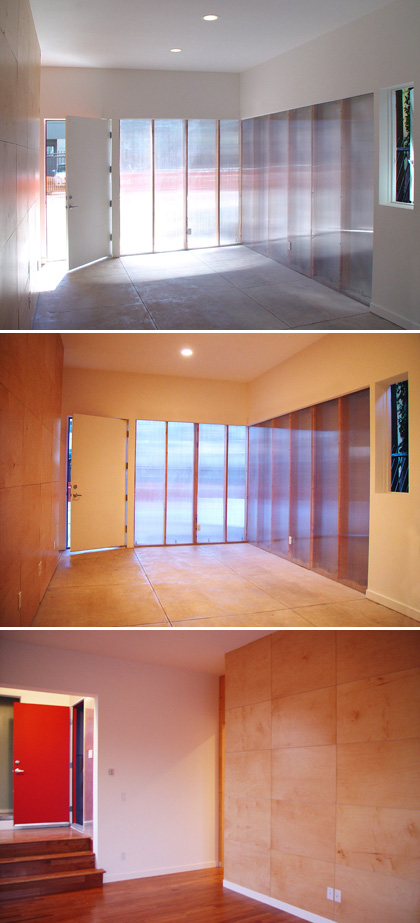
Wednesday, December 31, 2008

Modern Minimalist Weekend House in Japan

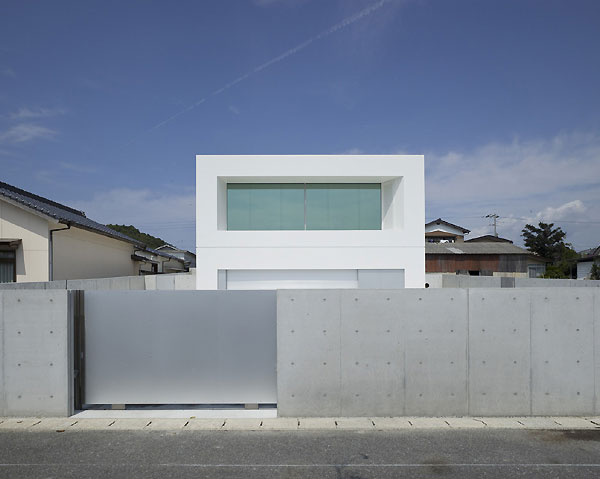
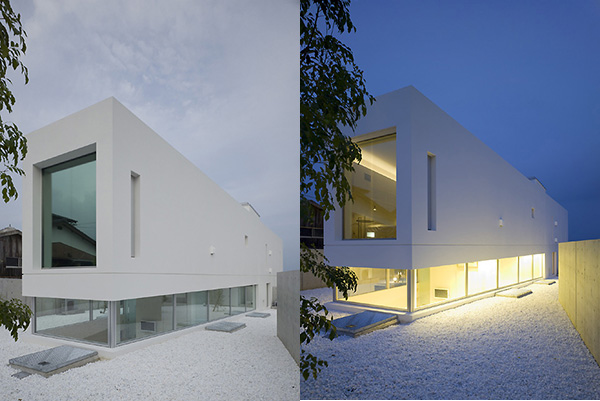
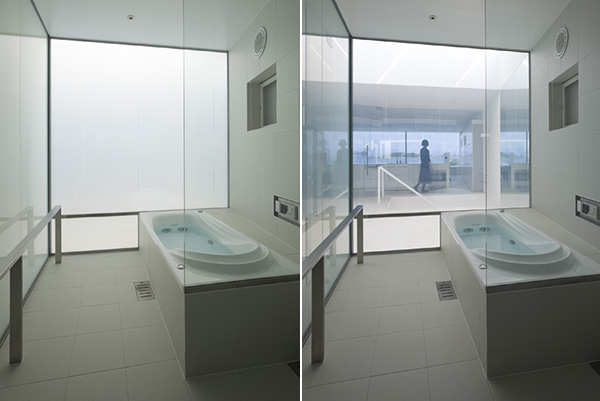
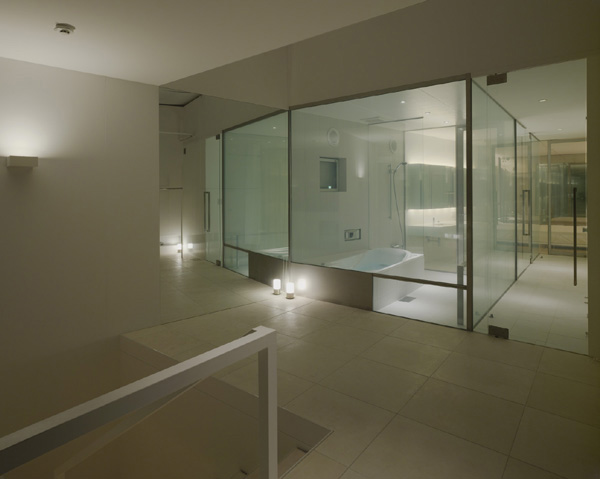
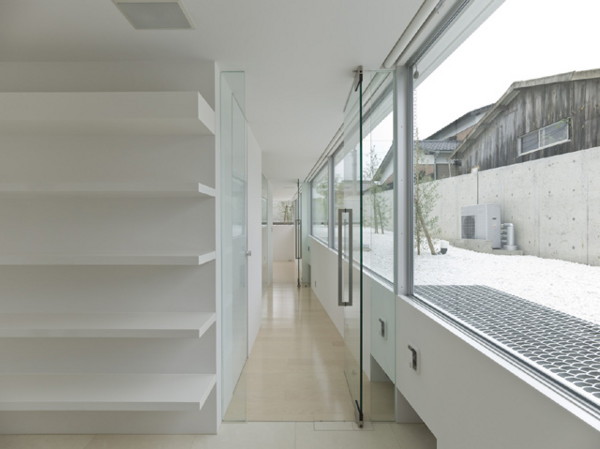
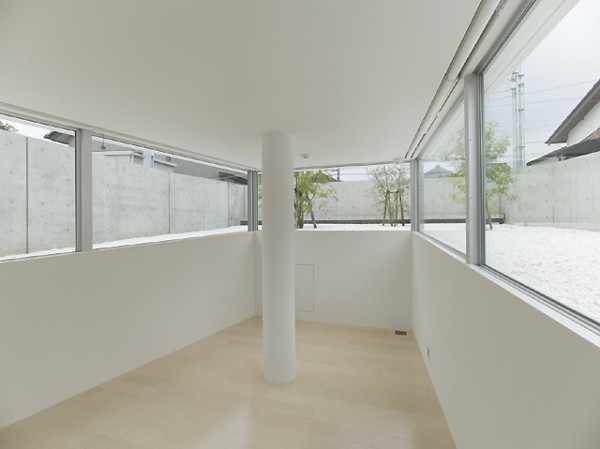
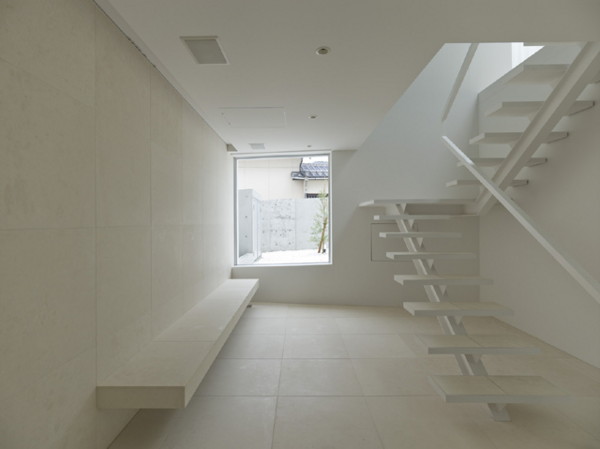
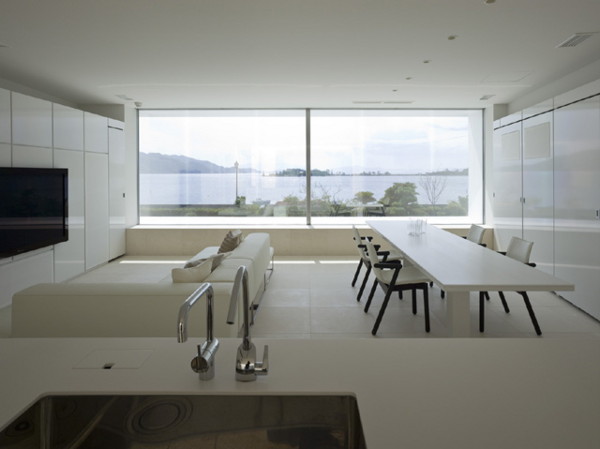
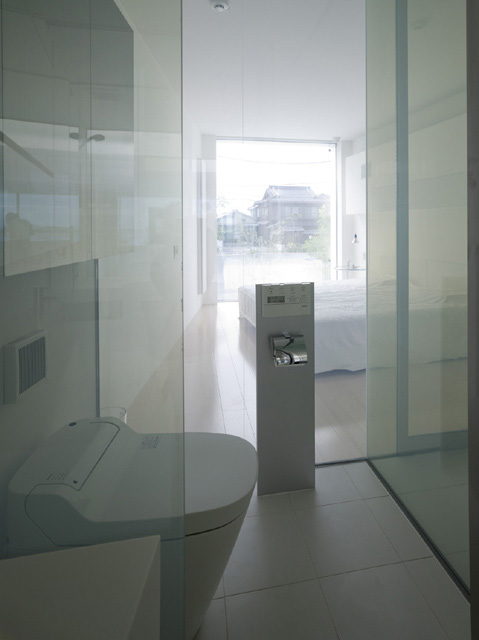
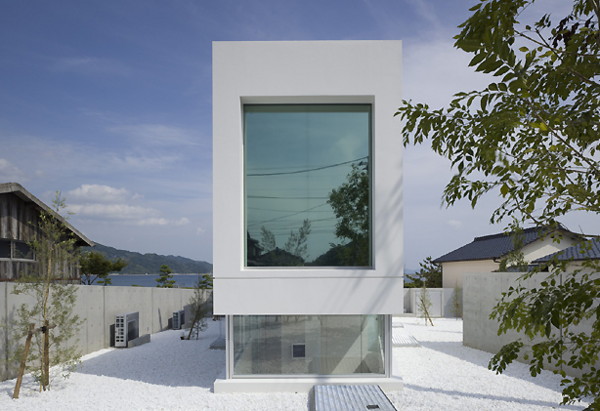
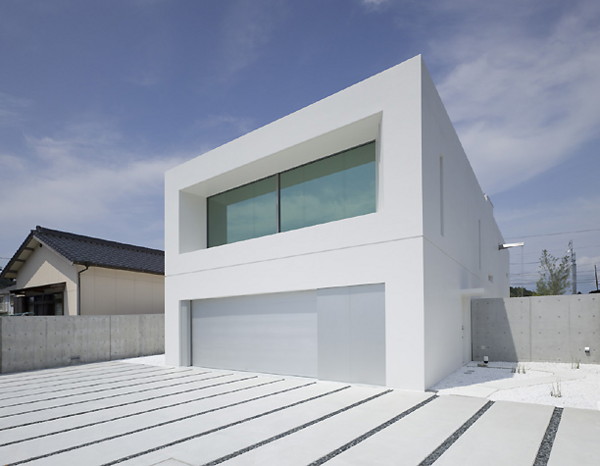
With one view of the sea and another of the garden, the ultra-modern Garden and Sea House by architects Takao Shiotsuka Atelier was designed to frame the picture-perfect panorama. This modern weekend house in Japan is nestled at the center of a plot that’s lower than that of its neighbors. The sunken home boasts a main floor that opens onto the garden and features expansive windows making up a large part of the facade. The rectangular shape of the house is slightly skewed, wider at its sea-fronting side to allow for maximum views from the second floor. Interiors are sun-soaked, thanks to an expansive picture window. Interior walls of glass allow every room to enjoy the same spectacular view of the sea. Both the interior and exterior of the home is minimalist in style, with a predominantly white palette and clean, contemporary lines. Takao Shiotsuka Atelier
photo credit: Toshiyuki YANO (Nacasa & Partners Inc.)
garden-and-sea-house-1.jpg

garden-and-sea-house-2.jpg

garden-and-sea-house-7.jpg

garden-and-sea-house-8.jpg

garden-and-sea-house-9.jpg

garden-and-sea-house-10.jpg

garden-and-sea-house-3.jpg

garden-and-sea-house-4.jpg

garden-and-sea-house-5.jpg

garden-and-sea-house-6.jpg

garden-and-sea-house-11.jpg

Tuesday, December 30, 2008

Contemporary House with History in UK – Modern Redesign by architect Sutherland Hussey

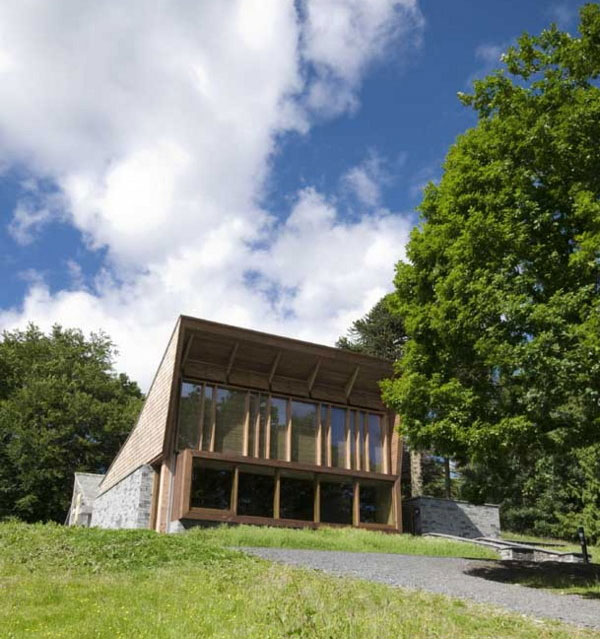
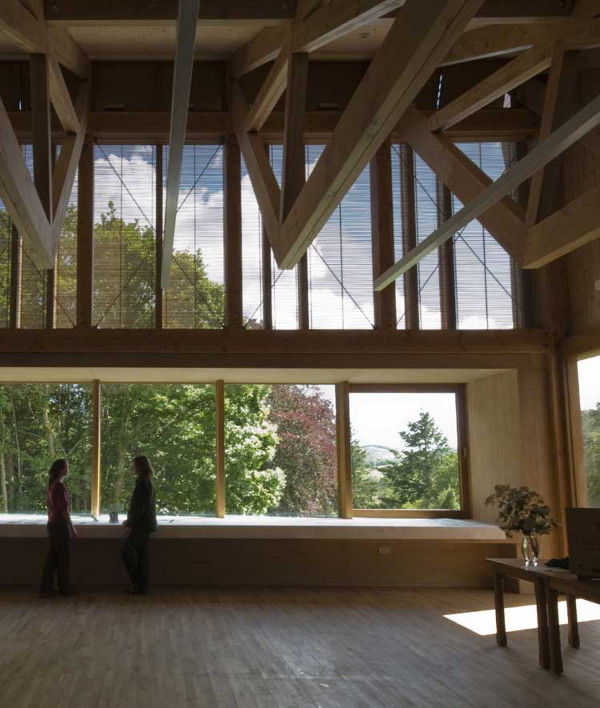
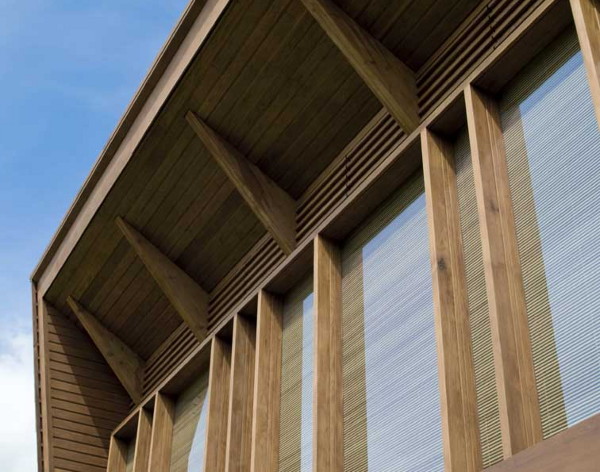
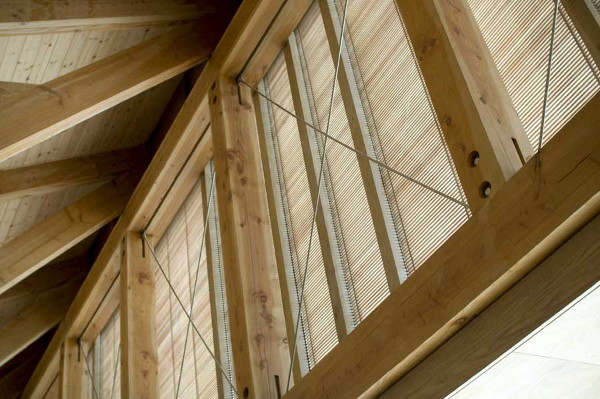
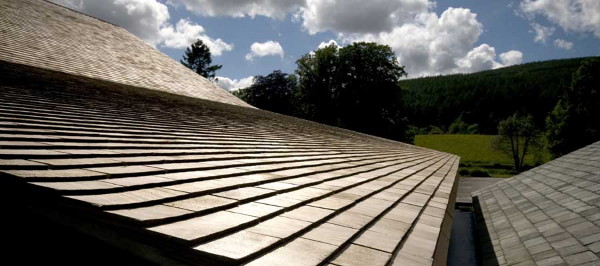
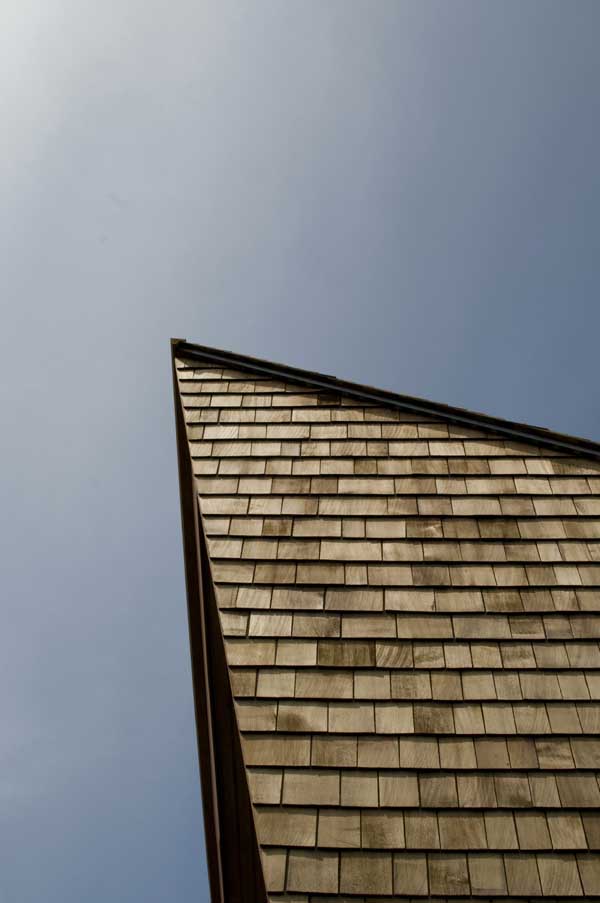
With history, geography and the environment prevailing in this outstanding design, there’s much to be learned from the unique Yan contemporary house by architect Sutherland Hussey. Originally built in 1903 in the UK’s Lake District, the redesign and renovation of Grizedale Hall is a £4-million project that all started with a competition held by the Forestry Commission – the owner of the property. Hussey’s rustic yet rich design won the bid for the new structure set amid 2400ha of publicly accessible land, dotted with forest and surrounded by winding hiking and biking trails. At the heart of Grizedale Forest sits this luxurious stone and wood structure with a face of windows that welcomes the natural views. On either side, two volumes extend on either side of the large glazed facade. The structure abuts a terrace where the original building stood a century ago. A distinguishing flat-topped roof takes a steep upward turn midway, adding a contemporary twist to the traditional building. The project is said to be completed in early 2009. Sutherland Hussey Architects.

yan-1.jpg

yan-4.jpg

yan-2.jpg

yan-5.jpg

yan-7.jpg

yan-8.jpg

Monday, December 29, 2008

Ultra-modern House in Nicosia, Cyprus Combines Modern Luxury and Sustainability

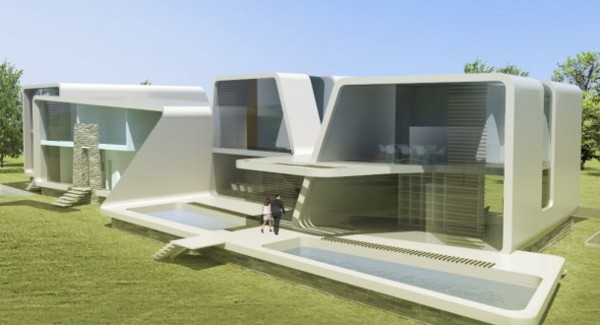
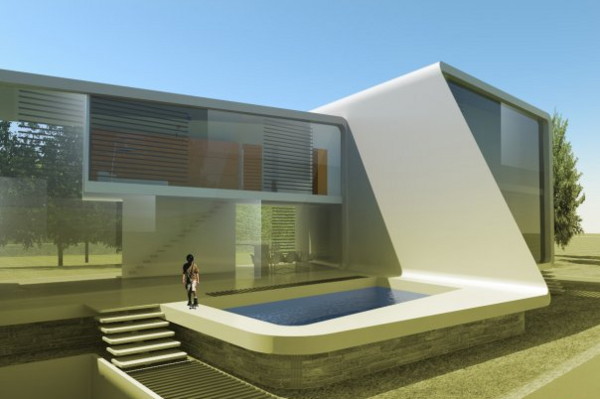
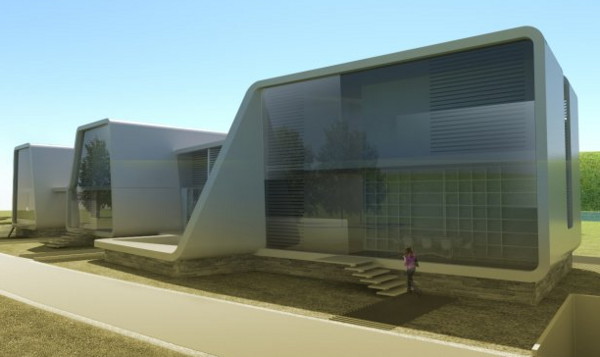
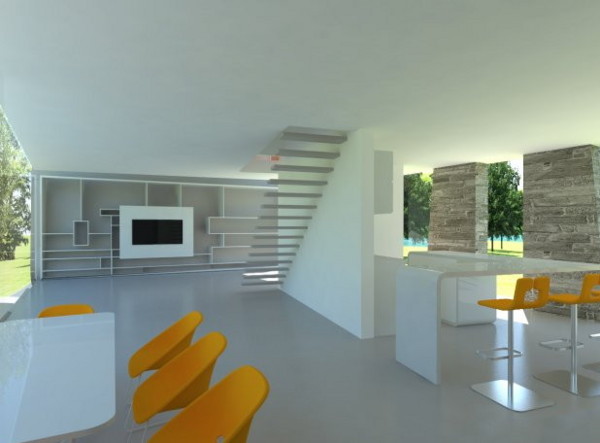
Italian architect Massimo Iosa Ghini has brought his ultra-modern brand of architecture to the residential stage with his design for Cyprus House – a futuristic interpretation of the traditional home. Designed for an up-and-coming community along the Pedieos River near Nicosia, Cyprus, this single-family home will be part of a four-home complex, designed with organic-inspired shapes and an overall easy flow. Expansive floor-to-ceiling windows are framed by clean, white concrete exterior walls. The home’s two levels and various volumes offer a sense of privacy. Aside from looking cool, the home is sensitive to the environment. Designed with a number of eco-friendly features, Cyprus House boasts low-E windows, adjustable solar panels, rainwater recycling, and a storage heating system to see residents through the winter months. Iosa Ghini
via Contemporist

cyprus-house-1.jpg

cyprus-house-2.jpg

cyprus-house-3.jpg

cyprus-house-4.jpg

Sunday, December 28, 2008

For Sale: Rustic Hamptons Retreat with Modern New York Style

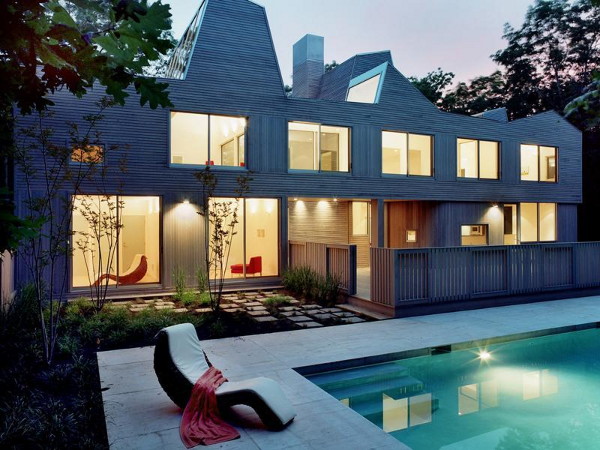
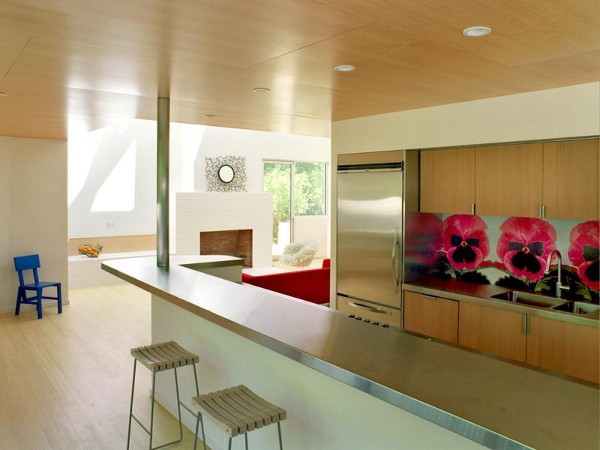
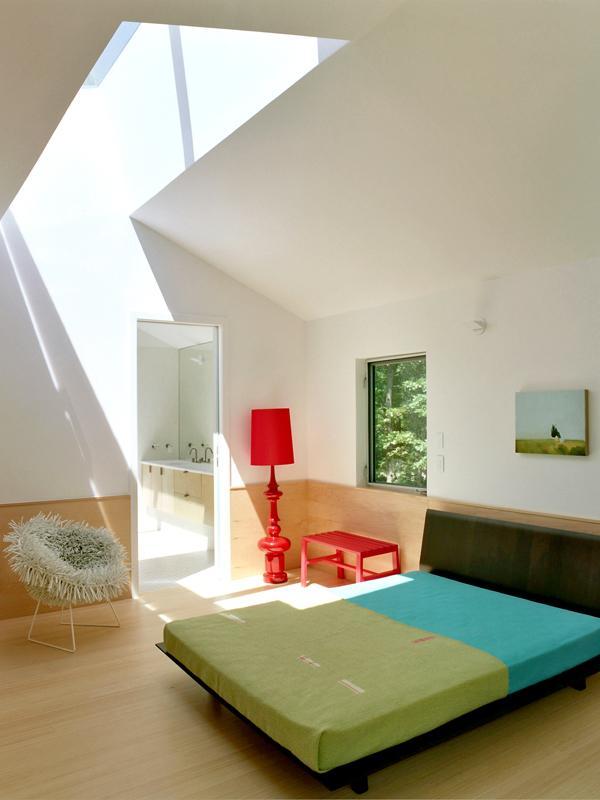
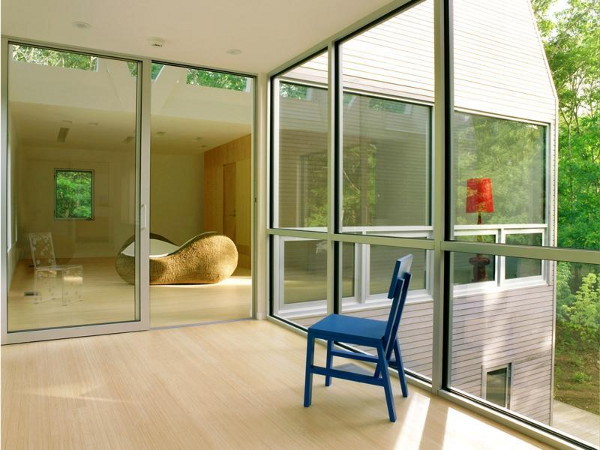
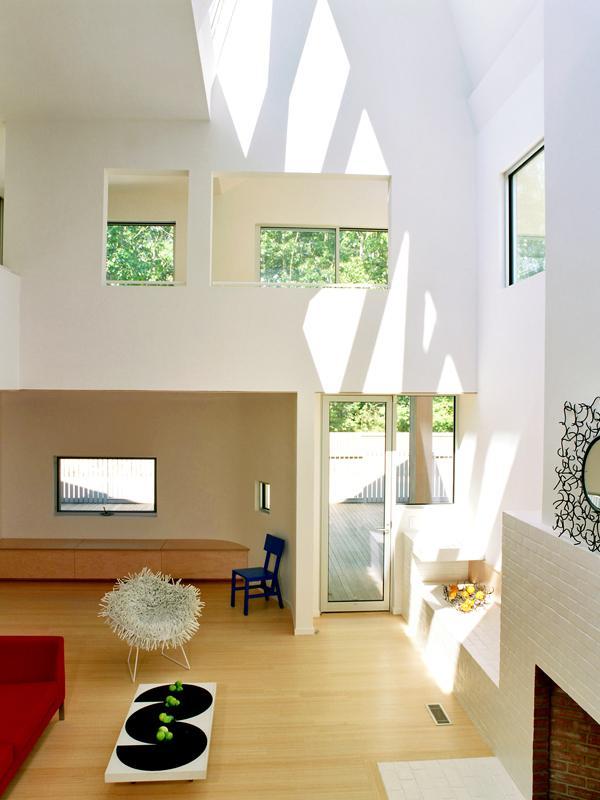
This modern home’s interesting roofline creates just one of its many points of interest. Designed by architect Stan Allen, the odd profile of Sagaponack House forms a weekend retreat in the Hamptons of New York. Another claim to fame is the home’s element of nature, both inside and out, from its treed surroundings, to the wood-clad exterior, and outdoor patios that lead indoors via large picture windows. This home is a cottage-chic three-bedroom design with warm yet contemporary clean-lined interiors. Cool, uncluttered living areas are naturally lit by the multiple skylights overhead, which make their sunlit marks onto the warm, wooden floors below. This luxury retreat residence is currently listed with Sotheby’s International Realty at an asking price of $2.6 million. Stan Allen Architect.

sagaponack-house-1.jpg

sagaponack-house-2.jpg

sagaponack-house-3.jpg

sagaponack-house-4.jpg

sagaponack-house-5.jpg

Saturday, December 27, 2008

Modern House in Somosaguas, Spain - sculptural design

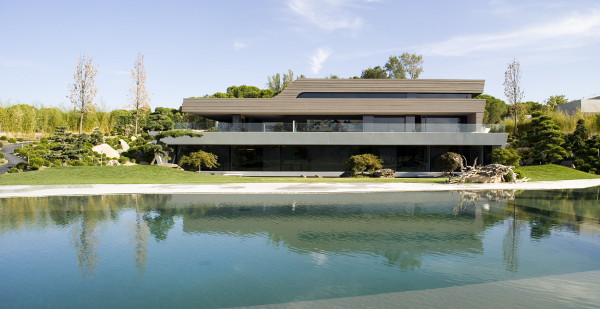
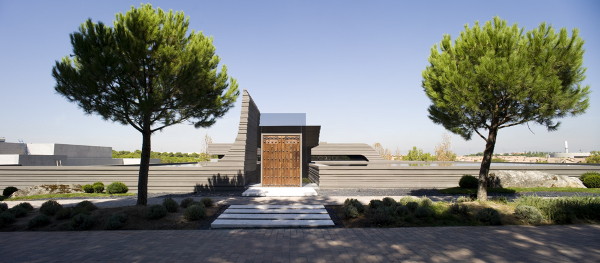
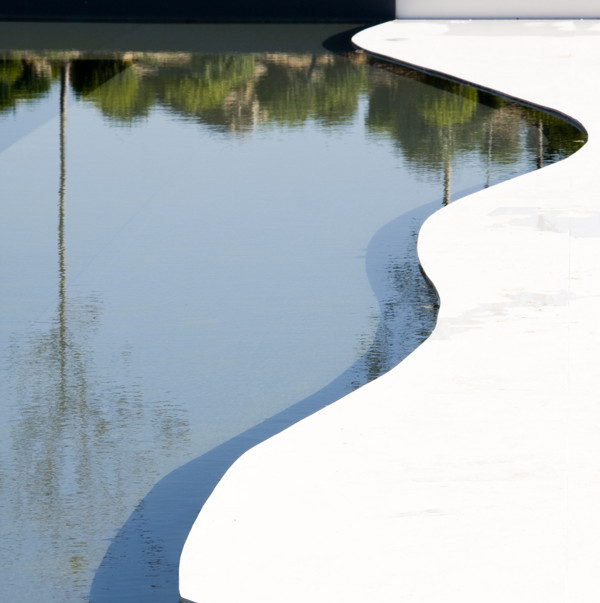
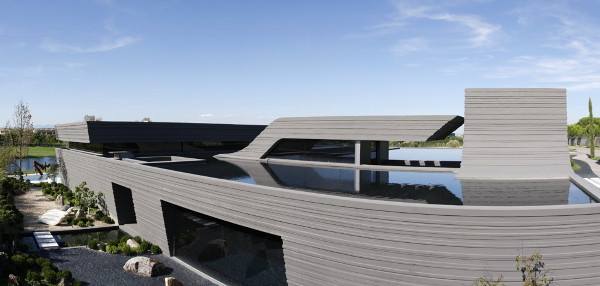
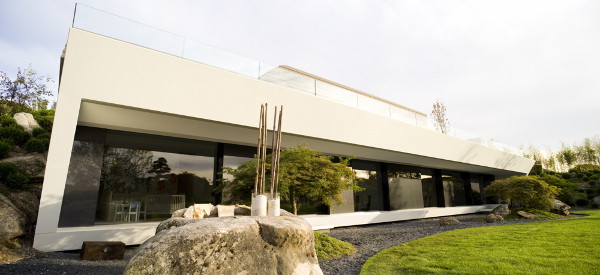
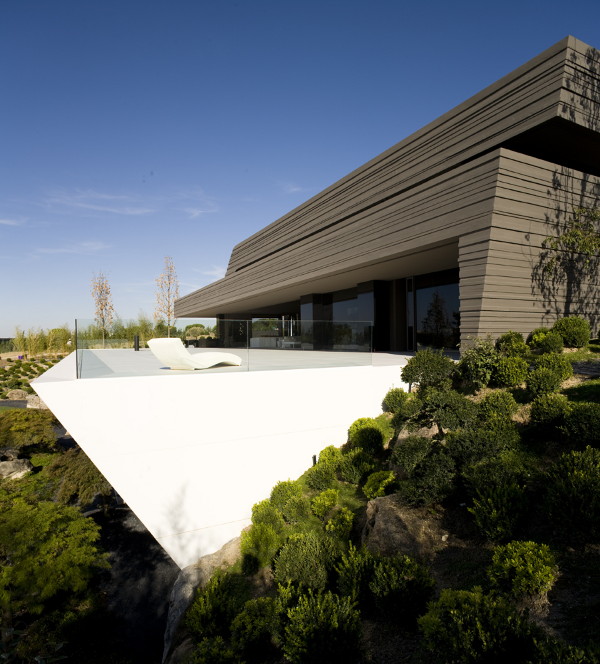
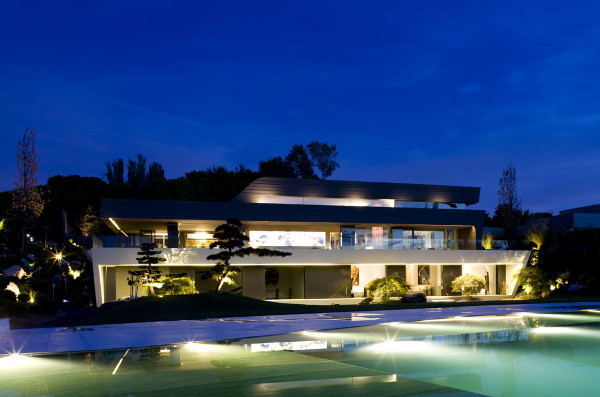
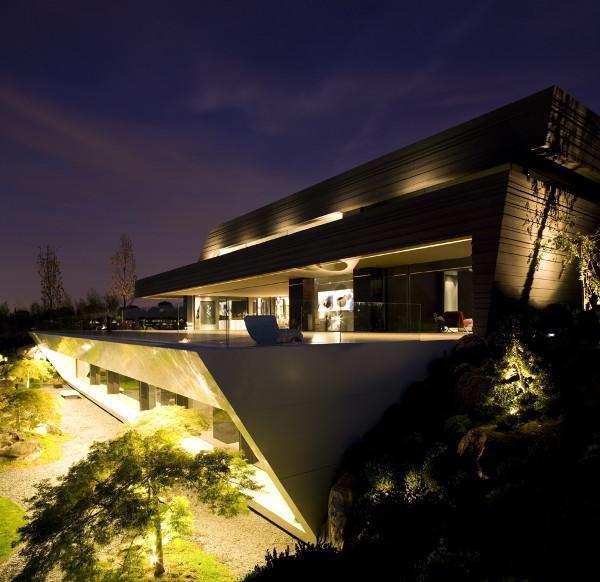
On the outer reaches of Madrid, in the Spanish city of Somosaguas, A-cero Architects have designed this sculptural, modern home on the water’s edge with the raw power of nature’s forces in mind. Part art, part architecture, this awesome, experimental design features a low-profile, bold curves and a horizontal layout that seems to sprawl out and grow up from its core. The architects describe the house as a “stratified building that seems to emerge from the earth like a natural formation, the facades are treated with a texturized dark concrete, completing the mineral analogy.” The home is encircled in a wide balcony, and a unique rooftop pool brings nature home. A-cero Architects
via Contemporist

somosaguas-house-2.jpg

somosaguas-house-5.jpg

somosaguas-house-3.jpg

somosaguas-house-4.jpg

somosaguas-house-1.jpg

somosaguas-house-6.jpg

somosaguas-house-7.jpg

somosaguas-house-8.jpg

Friday, December 26, 2008

Luxury Ocean View House in Sydney, Australia - Northbridge

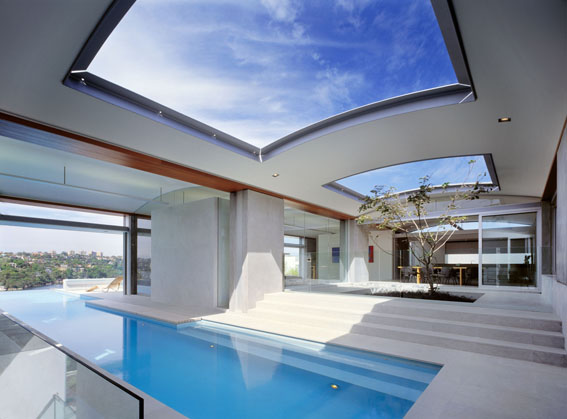
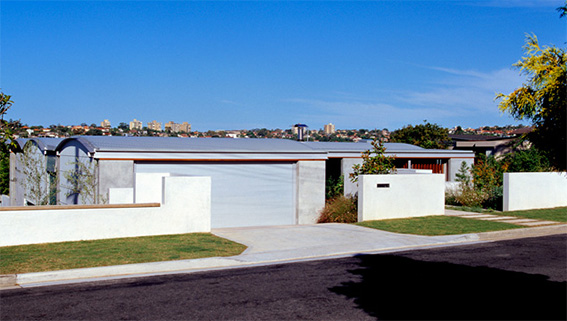
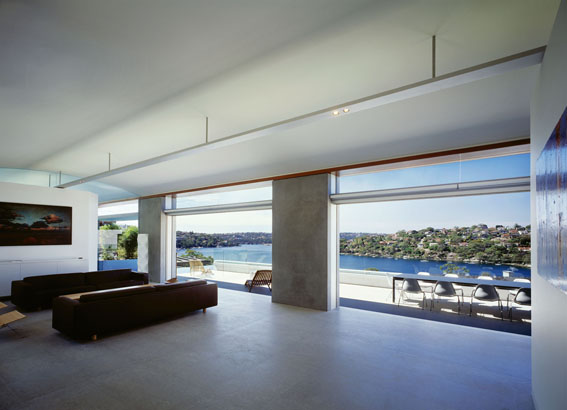
Bringing an ultra-modern edge to the outskirts of Sydney, Australia, the award-winning Northbridge House designed by architect Alex Popov sits at the end of a peninsula overlooking the Middle Harbour. The magnificent ocean view is framed by the home’s four steel vaults and 48 concrete columns, which are exposed and enclose its contemporary, open-concept floor plan. The luxury interior of this single-storey design is based on the four vaults. The first vault houses the foyer, a sitting room and a master bedroom; the second features functional spaces including the kitchen, dining room, a courtyard and a pool terrace; while the third features a formal living room and a stairway to the lower level where you’ll find the remaining bedrooms, a family room and opening to the outdoor tennis court. The pool terrace features a massive skylight above an 18-meter infinity pool, which extends from indoors out and cantilevers over a three-storey void. Alex Popov & Associates
via Best House Design

northbridge-house-1.jpg

northbridge-house-5.jpg

northbridge-house-2.jpg

northbridge-house-3.JPG

northbridge-house-4.JPG

Contemporary Home Design in Portugal - Steep Slope Home

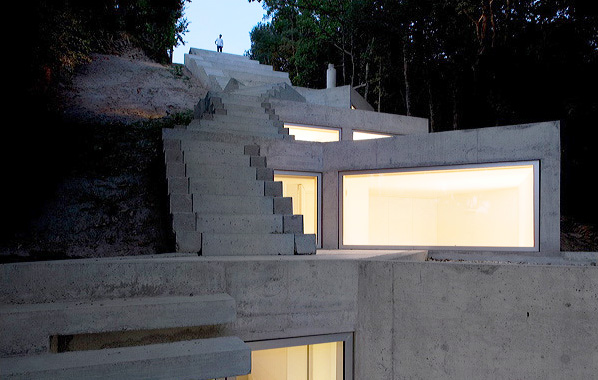
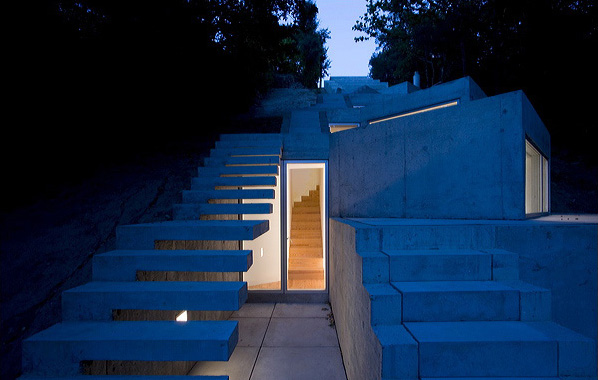
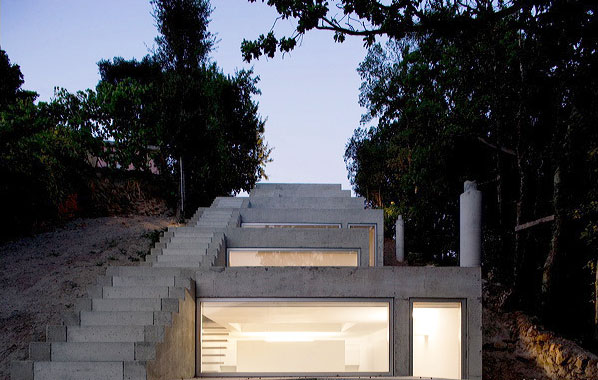
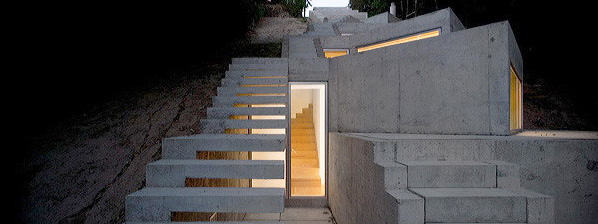
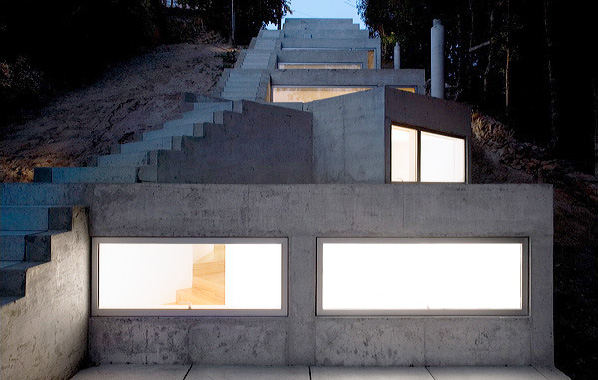
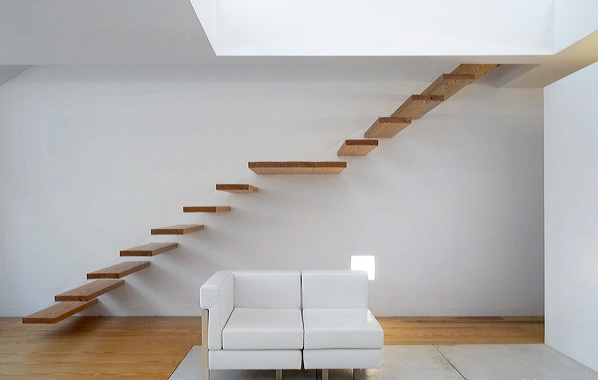
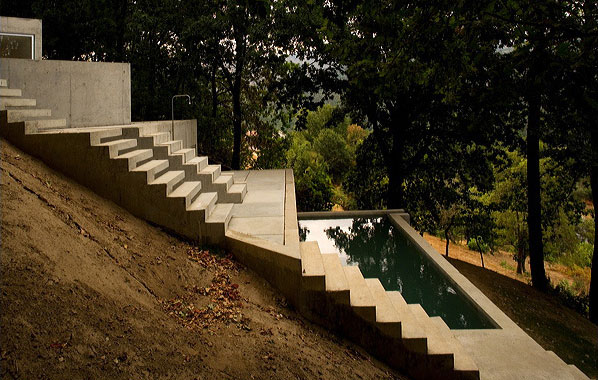
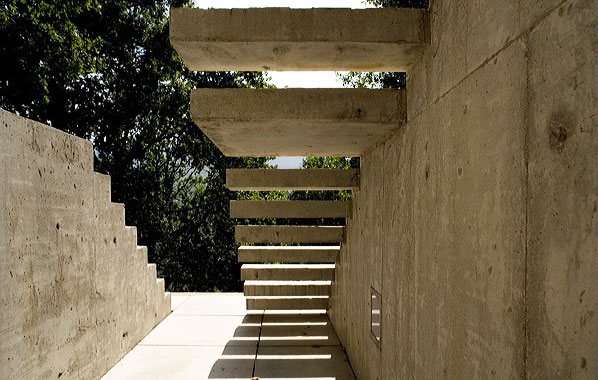
Tolo House by architect Alvaro Leite Siza is a contemporary home design that sits on a steep slope in Penafiel, Portugal. It’s the site’s unique topography that dictates this home interesting composition of multiple individual yet interconnected volumes, which allow this design to naturally unfold along the rocky terrain. Three bedrooms, a shared bath, a living room, dining room, kitchen and pantry complete the home’s communal living areas. Between these various elevations are an outdoor swimming pool and covered patios, connected by a footpath and stairs leading up the hillside. The exterior of this modern residence boasts a cool, edgy appeal with its concrete facade, sharp geometric forms and metal doors. Interiors are quite contrary, boasting a minimal laid-back softness about them with a palate of white accented by rich wood doors, interior floors and trim, and a floating staircase that is as functional as it is beautiful. The roof of this innovative home is paved and accommodates a garden with a view of the valley. Alvaro Leite Siza
via Cube Me

tolo-house-5.jpg

tolo-house-1.jpg

tolo-house-15.jpg

tolo-house-2.jpg

tolo-house-3.jpg

tolo-house-4.jpg

tolo-house-7.jpg

tolo-house-11.jpg

tolo-house-12.jpg

tolo-house-13.jpg

Monday, December 22, 2008

Modern Addition Renews Century-Old Victorian House in Southern California

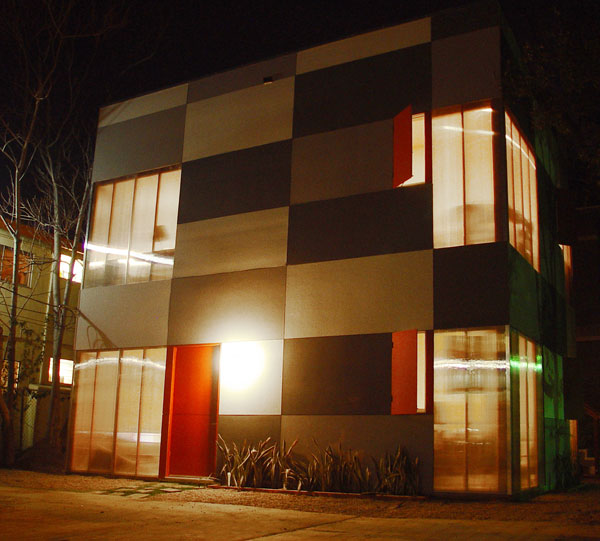
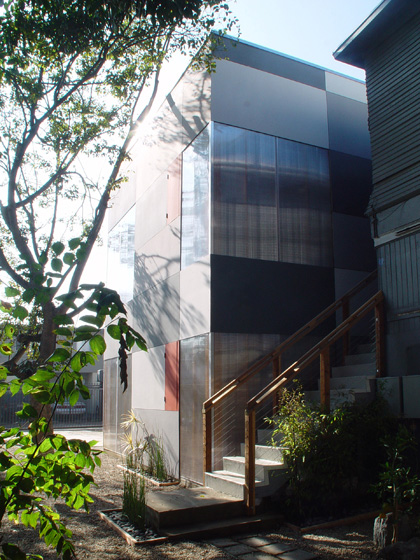
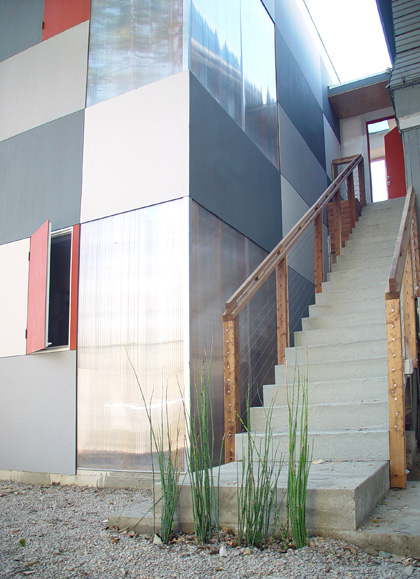
To avoid the demolition of a hundred-year-old Victorian home, a modern 1,200-sq.-ft. addition was created by designer Christopher Megowan to bring new life to an old structure. Today, this century-old home serves as a dormitory for students of the University of Southern California. Megowan – a student of the University’s School of Architecture – purchased the home as an investment property, and built this addition on a modern budget of less than $130/sq. ft. In order to maintain the Victorian integrity of the house, the new, modern addition is separated from the existing structure by a five-ft. clear polycarbonate annex, leading residents from old to new. With economic-efficiency and environmental responsibility top of mind, the young designer/developer designed the basic structure from four-by-eight-ft. fiber-cement panels and polycarbonate walls that allow natural light to filter into the home, reducing the demand for grid-powered lighting. Built-in flaps and functioning skylights allow for passive ventilation. In addition, the polycarbonate walls are wired with integrated LEDs that create the effect of a glowing wall for energy-efficient lighting throughout the home. Concrete floors allow for passive thermal control. Inside, tall ceilings enhance the home’s sense of openness and brightness. Bedrooms are separated by closets with sliding doors, acting as a sound barrier for privacy.

usc-dorm-residence-8.jpg

usc-dorm-residence-2.jpg

usc-dorm-residence-3.jpg

usc-dorm-residence-4.jpg

Thursday, December 18, 2008

Edificio Acqua by Rafael Vinoly Architects

edificio-aqua-rafael-vinoly-architects architecture

Uruguayan architect Rafael Viñoly has designed Edificio Acqua in Punta del Este, Uruguay. The L-shaped, six story residential complex is Rafael’s first completed building in his native country of Uruguay. Here is some information about the building from the architect.

Edificio Acqua is a six-story luxury residential complex that faces the South Atlantic Ocean in Uruguay’s upscale beachfront resort of Punta del Este. Located adjacent to the main oceanfront roadway, this L-shaped, 34-unit building responds to an irregularity shaped site with dense, context-sensitive development, introducing an unprecedented level of construction quality and architectural refinement to the high end of the Uruguayan housing market.

edificio-aqua-rafael-vinoly-architects-2 architecture

edificio-aqua-rafael-vinoly-architects-pool architecture

edificio-aqua-rafael-vinoly-architects-3 architecture

edificio-aqua-rafael-vinoly-architects-bathroom architecture

edificio-aqua-rafael-vinoly-architects-kitchen architecture


Wednesday, December 17, 2008

7 Examples of Sustainable Housing for First Time Homebuyers

Sustainable housing is no longer solely the preserve of the rich and idealistic. Housing that is made cheaply from renewable sources are popping up with increasingly frequency all around the world. From New Orleans homes to huge apartment blocks, sustainable housing is good for the planet, good for your company’s reputation, and is increasingly within everyone’s price range.

treelodge architecture

Treelodge@Punggol [Singapore]

Singapore recently unveiled plans for their first residential, sustainable housing project. The ecologically sound complex uses solar power, water recycling, and is surrounding by an eco-deck intended to absorb heat and allow for outdoor recreation. Rainwater will serve to provide the estimated 130,000 gallons required by the complex. With a chute for recycling in every apartment, it couldn’t be easier to be eco-friendly. Plants grow on outside walls to keep the inside cool. This will reduce the 712 apartments’ need for high-energy air-conditioning. The apartments are priced as low as $90,000, only 15% higher than similar apartments.

bedzed architecture

BedZed [London]

BedZed, the Beddington Zero Energy Development offers affordable sustainable living, reproduced for 82 houses, 17 apartments and almost 1,500 m sq. of work-space. The development is a zero-energy community close to London and it considers itself carbon-neutral. The energy neutrality comes from a mix of smart-building choices, sustainable materials, and clever energy saving and production technology such as waste water recycling and water heaters that double as radiators, fed by a centralized heat and power plant that burns waste wood that would otherwise be sent to the landfill. They also emphasize mitigating the use of cars and try to ensure that the energy that went into the product is low energy and sourced locally.

dinkins-gardens architecture

Dinkins Gardens [New York City]

New York is also getting in on the sustainable housing act with a $20m development that works out at a very manageable $250,000 per unit, which is a comparatively small for New York City. The development features include south-facing solar shades, apartments that are individually vented and a grey-water system that irrigate local landscape and the gardens. About a quarter of the units are reserved for people on low incomes who perhaps can’t afford a huge home loan, part of a drive to to fulfill a pledge to build 165,000 units of affordable housing in the next decade in New York.

ruralzed architecture

Rural Zed [United Kingdom]

With an increasingly eco-friendly housing regulation coming into force in the United Kingdom, houses like those built by Rural Zed will not be a novelty for long. Rural Zed is realistic, understanding that housing needs to be constructed in medium density locations and occasionally on flood plains, adjusting their designs for both situations. The basic design can be utilized as terraces, or as north/south or east/west facing constructions and can be optimized so that they can be built on flood plains.

solara architecture

Solara [San Diego]

This apartment community in San Diego is powered entirely by solar power, with unit price depending on occupants’ income. They come with the ever increasing range of eco-friendly and sustainable living features such a passive solar orientation and tankless boilers for the apartment’s hot water needs. They were developed with the aid of California’s Zero Energy Homes program, allowing rebates for homes like these that offer ’smart growth’ and are local to public transport and amenities. Like many of the sustainable housing projects featured, these are geared towards and located to maximize pedestrian lifestyle.

greenola architecture

GreeNOLA [New Orleans]

Sustainable living cannot function best when stuck on the edge of a city, away from convenient public transport links. The chance provided in New Orleans for sustainable housing is great. After a design competition with which Brad Pitt got involved, a winner was chosen: the wining design uses energy efficient appliances, use recycled building materials, and is designed to cut pollution and save money on operating costs.

ecology-house architecture

Ecology House

Last decade, development of sustainable housing began to take speed. Donald Watson was commissioned to produce an eco-house that could be built for the same price as an average starter home would cost. The ‘Ecology House’ was the result, winning design awards in 1990 and leading the way for low-energy housing focusing on sun-path positioning, suitable for locations as far north as New York and Detriot. By saving people money on energy costs, these houses gradually pay for themselves, even with an initial cost slightly home than average homes. The $100,000 house costs $100 a year to heat and cool.

Tuesday, December 16, 2008

Tips on Hanging a Picture

Hanging a picture makes you think of grabbing a few nails and a hammer and you’ll be done in a few minutes. That is not correct all the time. Sure, some pictures can be hung with a nail but do you know the correct placement? Do you know how to ensure the picture is level? Too often have I walked into people’s homes and seen pictures that are not correctly placed and/or are uneven, so uneven it is quite apparent. Your eyes can sometimes play tricks on you during the process of hanging a picture so we have put together some tips on getting that picture hung correctly.

The first thing you have to do is take into consideration what kind of wall you are working with. An ordinary wall can use simple picture hooks or nails, but if the wall is made out of a harder substance you will need to use concrete screws. These can be found at any local hardware store.

Weight of the picture is another thing to consider. If the picture is large or heavy you will need to use anchors to make sure the picture is stable and securely fastened to the wall. Once you have the items you will need to hang the picture, you can decide on picture placement.

A picture should always be hung at eye level. This means the center of the picture should be even with your eye level. So, to get the correct level you can hold a tape measure to the wall and mark the place on the wall which falls at eye level. Now, measure your picture from top to bottom, subtract 50% and that’s your center. The center of the picture should be even with the mark you placed on the wall once it is hung. Just grab your hanging materials and secure your picture to the wall. You can use a laser level to make sure your picture is leveled correctly.

It may seem like a lot of work to hang a picture but to have it done correctly the 1st time can give you satisfaction and great looking pictures.

Monday, December 15, 2008

Tips for Painting Horizontal Lines

Stripes, no matter which direction, can add style to a boring plain wall. Whether you want tone on tone color or a dramatic contrast of color, stripes can be stunning on your walls. Horizontal lines can give a room a contemporary feel and depending on width of stripes can make a room appear larger. The wider the stripes the larger the room feels. It may seem that you need a professional to do your stripes but you can actually do it yourself with little difficulty. The main thing is to make sure each line is perfectly straight and horizontal.

Items Needed:

* Roller brush or small paint brush (depending on how wide your stripe will be)
* Large roll of painter’s tape
* Tape Measure
* Paper to Cover floor areas
* Pencil
* A Level

Before you start prepping to paint you need to decide where you want the stripes to be. How high do you want the stripes to start and how wide do you want it to be? Once you have this figured out you can start marking your points. You want to start from the floor and using your tape measure, measure up to the point where you want the stripe to start. Mark this with a pencil. Do this every few feet around the wall until you have your whole area marked out.

Next, following your pencil marks around the wall using your tape, the tape will go below the pencil marks. You will need to make sure this line of tape is straight. You can use your level to make sure your lines are going up perfectly horizontal. The tape is for protecting the wall you don’t want painted and it will give you neat crisp edges.

Now you need to make your top line for your horizontal stripe. Once you decide how thick you want your stripe to be you can do just as you did previously, measuring from floor up and marking the way around the wall then taping off. Remember this time the tape will go above your pencil marks. Use your hand to go along tape smoothing it down to make sure there are no air bubbles that paint could run in and mess up your crisp lines.

Once everything is completely taped off you can start painting. Lay out your protective paper to cover your floors. If your stripes are wide you can use a roller brush, if they are skinny you will need to use a small paintbrush to paint your stripes.

Painting horizontal lines can be an easy project you can do to add interest to your room. Take to the time to do your prep work properly and you will have beautifully professional stripes on your wall.

Sunday, December 14, 2008

Werner Sobek’s Modular Homes

wsobek1.jpg

German engineering has long been heralded as innovative and forward-thinking. And with the help of German innovator, acclaimed architect and structural engineer, Werner Sobek, the ingenuity also appears to be pushing the prefab movement. Werner Sobek and his engineering and design firm have conceived a modern, modular, and minimal series of prefab homes: the R128, H16 and R129. Engineered to be sleek and sustainable, the R128 and H16 are custom designed using prefabricated lightweight, modular parts and special systems designed to be energy-efficient and off-the-grid. The R129, on the other hand, is a complete departure from the traditional notion of a house - or a box- in fact, it’s an elliptical globe.

wsobek2.jpgR128

The R128 is a glass-and-steel home whose materials were planned to be 100% environmentally friendly and recyclable. Its parts are lightweight and modular so that the experimental home that sits right outside of Stuttgart, Germany was constructed in just 11 weeks. Inside, the home has no doors or walls and is controlled by motion sensors and voice commands. The home is also energy-efficient with solar panels on the roof and glass panels (triple-glazed!) that help maintain comfortable room temperatures all year round.

The cubist H16 is constructed from contrasting cubes. Open glass cubes house the public functions while black concrete cubes surround the private spaces. The ensemble is highlighted by a light-colored cube. Heated by a specially designed geothermal system and powered by photovoltaics, the H16 is able to collect the energy that its inhabitants uses. Recently named a Record House by Architectural Record, the home is garnering international attention.

werner sobek, prefab, h16, prefabricated houses, prefab housing, sustainable building, sustainable houses, energy-efficient homes

Next up from Werner, an addition to the R series, the R129. With no traditional ‘bones,’ this structure is enclosed by a plastic material which is very light and transparent. The frame is constructed from carbon box sections. Its futuristic engineering is also characterized by the electrochromatic foil that allows the plastic envelope to be darkened or made completely opaque in sections or as a whole. (Who needs curtains in the future?) Wired into the flooring, called a ‘foundation raft’, are connections for electrical energy, water, compressed air, and communication lines. There are no partitions or walls between the functional areas in the experimental R129 which is slated for completion in 2009.

werner sobek, prefab, h16, prefabricated houses, prefab housing, sustainable building, sustainable houses, energy-efficient homes

werner sobek, prefab, r128, r129, prefabricated houses, prefab housing, sustainable building, sustainable houses, energy-efficient homes

Saturday, December 13, 2008

Dupli Casa by J. MAYER H. Architects

Dupli Casa by J. MAYER H. Architects
The geometry of the building is based on the footprint of the house that previously was located on the site. Originally built in 1984 and with many extensions and modifications since then, the new building echoes the „family archaeology“ by duplication and rotation. Lifted up, it creates a semi-public space on ground level between two layers of discretion. The skin of the villa performs a sophisticated connection between inside and outside and offers spectacular views onto the old town of Marbach and the German national literature archive on the other side of the Neckar valley.

Jürgen Mayer H. is founder and principal of this crossdisciplinairy studio. He studied at Stuttgart University, The Cooper Union and at Princeton Universtiy. His work was published and exhibited worldwide and is part of international collections like the MoMA New York and SF MoMA. His work was awarded with numerous prizes, i.e. the Mies-van-der-Rohe-Award 2003 Emerging Architect and Winner Holcim Awards 2005 Bronze Europe for Metropol Parasol. Jürgen Mayer H. tought at Princeton University, University of the Arts Berlin, Harvard University, Kunsthochschule Berlin, the Architectural Association in London and is currently teaching at Columbia University in New York.

Friday, December 12, 2008

Zenni Optical

If you’re looking for a big result of a medical prescription in order to the celebration shots Holiday Glass Frames From Zenni Optical. They have a great selection. In fact, I have another pair for my daughter and she loves. She is so young, so I do not want to spend a fortune on glasses and Zenni not. The popular online eyeglasses shop for glasses and $ 8 Complete Rx Eyeglasses are not complete, may be wrong.

ML Museum Liaunig by Querkraft Architects

ML Museum Liaunig by Querkraft Architects

Projects Description and Credits:
Client: DKFM Herbert Liaunig
Design and Planning: Querkraft (Jakob Dunkl, Gerd Erhartt, Peter Sapp)
Project Architect: Erwin Stättner
Project Team: Sandra Denk, Dominique Dinies, Vera Kittler, Janine Hochrieser, Jan Geldermann, Charlotte Lieske, Tobias Colz, Petra Meisenbichler, Dana Rakova
General Contractor: Werkstatt Wien, Vienna
Executive Architect: Querkraft Zt Gmbh, Vienna
Structural Engineering: Werkraum Wien Ingenieure
Project Management: Jan Umlauf, Vienna.
Effective Area: 4,400 M²
Gross Floor Area: 4,810 M²
Cubature: 32,100 M³
Competition: June 2006
Start Of Construction: August 2007
Completion: May 2008

ML Museum Liaunig, Neuhaus, Austria – When Heinz Tesar's museum for the Essl Collection was opened in Klosterneuburg, near Vienna nine years ago it was Austria's first newly built private museum and seemed likely to long remain the only one of its kind. However a worthy successor soon came along in the form of the Liaunig Museum in which a new generation of architects interprets the phenomenon "art" in its own way.

Located in the scenic regions of Southern Austria, the project is built high up in the landscape. Museum Liaunig has a remarkable architecture that protrudes out on two sides over a steep-sided landscape. The cut through the hill marks a punctual intervention in nature.

Anchored into the site the new museum emerges more like a work of art. Only a small part of the outstretched museum building is visible. Cut through the hill, the main body of the museum slices through a densely wooded, steep-sided embankment, providing an unparalleled view over the Drava river seventy metres below. The building cantilevers an impressive thirty metres out, over a steep bank towards the oncoming road - clearly visible to
the approaching visitors.
The museum entrance zone is orientated toward both the centre of Neuhaus and the nearby historical castle owned by the museum’s patron. Visitors to the museum go through the substantial storage depot that composes one of the main areas of the museum. Stretching the whole length of the gently sloping approach to the main exhibition hall, visitors are accompanied by this ‘wine cellar of art’. This underground space offers the possibility to organise a variety of exhibitions by virtue of flexible screens and lighting arrangements.
The building' s core is a 160-metre long, fully day-lit exhibition hall, with protected terraces at each end. The continuous 13-metre wide by 7-metre high space is covered by a part translucent curved-skin – an industrial enclosure permitting daylight. The hall is organised with mobile exhibition panels.

ML Museum Liaunig by Querkraft Architects

A daylight-free, gently conical room dedicated for the Graphic Collection lies adjacent the ramped entrance. The collection is enclosed by the main hall and is oriented towards the entrance. A window facing Neuhaus at the end of this room sits over the foyer. Another chamber, connected by a small corridor, hosts the Gold Collection. Finally, Brigitte Kowanz' s light installation brings the visitor back towards the underground collection.

Efficiency and sustainability:
The high cost usually attributed to the external enclosure was avoided by sinking the majority of the building below ground. The excavated soil was reutilized for remodelling the site. Industrial materials like concrete, glass and sheet
metal dominate the visible portion of the building. Set into the hill, the building benefits from a tempered environment. A geothermal heat pump exploits the constant temperature of the ground. Roof lighting was used instead of artificial lighting whenever it was possible.

Thursday, December 11, 2008

Modern house ocean views will be the new trend house in 2009.

Live near ocean with wonderful sigh seeing is the dreaming anyone. Live so far from the city and we always relax. Modern minimalist style suitable applicate this house ocean views. Beside ocean we can see green hill and beauty garden, and warm the sun rise. We could see clean and healthy house ocean views with natural oxygen. If we go in look the interior we can find large living area with modern chair decorate this house. We could see beautiful coach and ocean from this open living area.Many real estate business predication the Modern house with ocean views will be the new trend house in 2009. This modern house picture source from Oceanfront Estate.

Modern-house-ocean-views-will-be-the-new-trend-house-in-2009.


modern-home-near-ocean


living-room-ocean-view

Wednesday, December 10, 2008

Chapel for the Deaconesses of St-Loup

Architects: Localarchitecture & Danilo Mondada
Location: Hôpital de St-Loup, Switzerland
Project year: 2008
Structure: IBOIS - Hani Buri, Yves Weinand
Client: Deaconess Community of St-Loup
Photographs: Milo Keller ©2008

Chapel for the Deaconesses of St-Loup

In the summer of 2007, Localarchitecture and architect Danilo Mondada were awarded the contract to renovate the mother house of the Deaconess Community of St-Loup. The commission involves the complete renovation of a historic building, including the community’s main chapel.

It was immediately apparent the mother house would have to be closed for the duration of the building works, in other words for 18 months starting from the summer of 2008. Instead of settling for a standard solution, like renting a tent or containers, the architects suggested building a temporary chapel to accommodate religious worship during the construction period.

Localarchitecture, which has a special interest in timber construction and new structural solutions, has made its name with several works exploring traditional and contemporary wood construction techniques. In this instance, the architects suggested working in partnership with Hani Buri and Yves Weinand from the IBOIS laboratory at the EPFL (École Polytechnique Fédérale de Lausanne), whose ongoing research into folded structures seemed particularly interesting and appropriate for this project. The team developed a structure using timber panels, which makes it possible to cover large areas with fine sections. The shape was generated using computer software that calculates the load-bearing structure, determines the dimensions and transmits this information to the machine that cuts out the 6-cm thick timber panels.

Built directly on the ground, the new chapel blends subtly and delicately with the landscape. The structure, which lies along the axis of the east-west valley and is open at each end, lets in plenty of natural light. Interpreting the traditional layout of protestant churches with their variations in width and height between transept and nave, the design creates a space whose horizontal and vertical dimensions vary via a series of origami-like folds, which give rhythm to the interior and exterior of the building. The folded volume generates a wide horizontal space at the entrance, before closing in and rising up to become vertical towards the centre of the chapel. Each fold in the facade reflects the light differently and thus emphasizes the progression and elongation of the volume. The structure punctuates the interior space, while creating an atmosphere conducive to reflection.

Transparent plastic panels in the gable side facades, covered with fabric, allow natural light to enter the chapel. The frame of columns and diagonals resembles the structure of a stained-glass window.

The wooden chapel in St-Loup is the first full-scale structure that incorporates design and structural analysis based on computer method of generating novel geometrical forms, but it is also a bright example of the spatial reinterpretation of a traditional religious space in harmony with its environment.

Tuesday, December 9, 2008

Modern apartment interior decorating ideas as the representative of modern lifestyle

Modern-apartment-interior-decorating-ideas-as-the-representative-of-modern-lifestyle

Many offers to have the dwelling took the form of the apartment possibly this has been normal, but was really abnormal if the apartment that was offered had a surplus and the special uniqueness. The enjoyment rested that not much time was the matter important to have a comfortable dwelling, safe and could inspired the requirement for occupants. The classic dream of having the residence like the housing complex landed center of the city and close to the workplace really was difficult to be gotten was caused by the limitations of the available land. The choice will be directed to the vertical dwelling or one apartment.

The Apartment that accommodate the requirement for occupants feel like live in landed house designed with the concept moved the house dwelling in the form of the vertical dwelling. Where in every unit in the design had the completeness as being proper for the house live in landed house complete with the page, this was realized with the existence of the quite wide balcony and pool deck. Moreover in certain units and penthouse had the personal swimming pool. Divided into 4 units of each one of his floors, in separated the pillar, the straight beam in accordance with the plan and surrounding area.
The apartment had the point of view so that this building more have a character and interesting by translating the concept of the tropical building in the form of the vertical building. This was realized with the amount of space was open that surrounded the perimeter of each one of his units, as the balcony (that could be made function as green space) at the same time provided overhang was as wide 2,5 meter functioned to avoid rain the excessive rain water. Moreover also reduced the use AC in each one of his units because of the existence shadow area could reduce hot. Space was open (the balcony/the swimming pool) in some unit in order to stand out through the perimeter limit of the building so as space that was created could be used for the green area. By using the structure of the cantilever then was seen by the exposure facade to the certain blank and this increased beauty at the same time the uniqueness of the building. Was one of the main thinking in planning the form of the building because that be related to how we saw, enjoyed and went through him every day. The design facade could be said get true if could calm, calm and generate the passion activities for his occupants.
This was the attraction of the prospective occupants to have the apartment that offered a surplus from the aspect of architecture, and luxury. The existence of the balcony that was made function as green space became extensive, this was not only met in the ground floor but also was gotten on his upper floors made the building appear greener in time. Eventually will become the vertical garden or the garden was suspended with trees in every floor. Combination the element of glasses with concrete and the deliberate nature stone was done in order to be seen the building more texture. Also with the existence of the balcony or the swimming pool that stood out will make seemed to have small canopies .
The interior had the eclectic style modern where combined partialities the modern lifestyle with beauty romanticism of the interior of past buildings. With many uses of elements of wood and the representative iron the modern lifestyle, while past romanticism was translated in the number of uses of the form organic in the element of interior. Comfort of occupant’s romanticism was also spoil with his interior that experienced the distortion with the achievement of the natural light that entered inside or some lighting was hidden in certain parts reflected beauty of the light. The publics facilities that supported the activity of occupants were concentrated the floor low like laundry, fitness center, means parked etc. This building had 64 cream units and used private the lift where each unit could be only used in accordance with occupants this room. In this way the value of privation was really given priority for occupants.

large-apartment


living-room-apartment


modern-minimalist-apartment


modern-minimalist-kitchen-in-apartment


minimalist-bedroom

Monday, December 8, 2008

Cream and white color combination in interior apartment

Many ways to make elegant and comfortable our interior apartment. One of ideas is create comfortable room interior apartment with Cream and white color combination as the main color in room interior apartment. We can see this picture there living room with combination cream color and white color combination. The wall and sofa have the same color that is cream color. About flooring use parquet and the cream rugs on the parquets floor. In the bedroom we could see combination cream and white color in bed cover and bed furniture. White curtain and brown parquet make this bedroom elegant and comfortable. So do in kitchen interior dominated with cream and white color, modern kitchen lighting hanging in this kitchen make kitchen look like luxurious.
white-cream-bedroom-in-apartment


cream-white-combination-kitchen


cream-white-combination-interior-apartment


white-cream-color-living-room

Sunday, December 7, 2008

Green Skyscraper by Cook + Fox


Expected be the first LEED Platinum skyscraper, the 945-foot- (288-meter-) tall Bank of America Tower is located at 42nd Street and 6th Avenue in Manhattan, opposite Bryant Park.

The 2.2 million-square-foot (204,000-square-meter) high-rise tower was developed as a joint venture between the Durst Organization and the Bank of America, and was designed by Cook + Fox Architects, with executive architect Adamson Associates Architects. Bank of America will occupy three-quarters of the building as its New York headquarters.

The base of the tower creates a variety of important public spaces, including the restored Henry Miller Theater on 43rd Street. It also provides three times the public circulation space of a typical as-of-right office building, including an urban garden room and a new entrance to the Times Square subway station.

The integrated strategies for this high-rise building focus on daylighting and indoor air quality, which foster human comfort and employee productivity. The double-glazed envelope consists of floor-to-ceiling low-iron, low-E glazing for maximum transparency and thermal performance. The raised floor plenum contains a filtered displacement system fed by floor-by-floor air-handling units. This decentralized strategy facilitates greater individual control and response to local conditions. Carbon dioxide sensors adjust fresh air ventilation based upon local, current room air conditions rather than predetermined air exchanges per hour for the whole building.

At the core of the building's energy system is a 4.6-megawatt natural gas-fired cogeneration plant. The plant supplies steam and electricity for the building. During the night, the plant produces ice for cooling loads the following day, offsetting electrical demand during the days.

The building also captures and reuses almost all of its stormwater and graywater in 329,000-gallon (1.25 million-liter) tanks. Waterless urinals and low-flow toilet and sink fixtures throughout the building, along with storm- and graywater systems, will save ten million gallons (38 million liters) of water annually.

Complexity, Composition, and Integrated Design

Contemporary architecture is characterized by a growing awareness of its inherent complexities. While the notion of complexity in architecture is occasionally expressed in complex building shapes, the actual complexity of architecture is difficult to apprehend visually. Rather than the composition of static objects, complexity in architecture can be more productively understood in terms of its own contingencies, performances, and potential effects.

Any building project is contingent upon an idiosyncratic assemblage of theoretical, practical, ecological, economical, political, social, and cultural parameters that presuppose the design and performance of architecture. Reflexively, architecture in turn affects these parameters. The role of architecture in the effectuation of sustainability is a prime example. The real complexity of architecture is in the cogent organization and integration of these multivariate parameters directing its potential effects toward some larger end through an architectural agenda.

Integrated design is typified by architects integrating and practicing this complexity. Thus integrated design involves not only deftly integrating the increasing complexity of building production — an expanding list of consultants and communications, increasingly complex building technologies and envelopes, energy-efficient techniques and technologies, software, fabrication and construction delivery methods, economic and ecological limits — but it also formally incorporates and directs the behavior of complexity.

Complexity in scientific thinking focuses upon systems that self-organize or otherwise produce novel effects not evident in the initial conditions or state of a system. Familiar examples include practices that denigrate a milieu (ecological, economic, or social) and also practices that sponsor mutually beneficial and productive ends for multiple, simultaneous milieus. The difference between the two practice types is the degree to which the respective agencies acknowledge and integrate the complexities of the assemblage that presupposes their work.

Depending upon the context, integrated design may mean that a building's spatial, construction, energy, and systems logics are intertwined. It may also mean that a building is the product of new social relationships amongst architects, clients, developers, buildings, communities, and consultants. Integrated design inevitably means many things to different practices depending on the context; however, each form of integration promises new futures for architecture and its constituencies.

In all cases, it is apparent that architects are uniquely positioned to engage the systemic nature of integrated practices that will characterize the new century. While architecture may not yet have overt theories of integration, all complexity thinking requires creativity, multiple-variable problem-solving, spatial and temporal thinking, the ability to visualize complex phenomena, and the ability to articulate rich — if not simple — and appropriate solutions to complex information. These are all characteristics evident in architectural education, and in the Bank of America Tower.

Another important theme from complexity thinking is that the concept of context is shifting to more comprehensive and productive applications that reflect the inherent complexity of architecture. No longer merely considered in the context of the adjacent real estate surrounding a project, the Bank of America Tower and other examples of integrated design emerge from a much more conscientious understanding of the systemic yet idiosyncratic contexts of any project: physical, social, economical, ecological, climatic, regulatory, and programmatic. Integrated design fundamentally involves a strategic reconstructing of the given, yet broadly defined, context(s) of a project.

The incorporation of architecture's complex contexts is central to integrated design and accordingly shifts what constitutes the term "composition" in architecture. Until recently, this term had always been dominated by the logic of a visual image. The logic of construction and its delivery, the logic of a high-performance building, or the logic of a particular market condition, for instance, provide equally potent and rigorous logics for composition alongside the role of visual logic.

In buildings such as the Bank of America Tower, it is clear that what composes architecture materially and immaterially is a broadened understanding of context and the multivariate assemblage of factors and forces that compose buildings. This understanding of "composition" is particularly evident at the confluence of two salient aspects of this expanded understanding of context: the energy milieu of every building site and the social construction of architecture.

Saturday, December 6, 2008

Prefab Chameleon House

prefab-house-chameleon

Designed by Anderson Anderson Architecture, the Chameleon House is a modern prefab home towering over the rolling topography of its cherry orchard site, peering outwards toward spectacular westward views of Lake Michigan and the surrounding agricultural landscape

With its galvanized sheet metal cladding of the wall surface, this vertical prefabricated structure is wrapped in a skirting wall of recycled translucent polyethelene slats, reflecting light and color of its landscape; hence the name - Chameleon House.

prefab-house-chameleon

The translucent polyethelene slats stand on aluminum frames that serve also as window washing platforms and emergency exit structures.

prefab-house-chameleon

… I guess either you like it or you don’t… the word “unusual” comes to mind when I think of this prefab home - Just look at that view.

prefab-house-chameleon

Friday, December 5, 2008

House on Swain’s Lane in London, Overlooks a Cemetery

I always knew those Brits are wicked, but not like that. Apparently on Swain’s Lane in London, there’s a glass looking house designed by London-based architects Eldridge Smerin, which has a great view, (prepare!!!) over a cemetery. Other than the fact that there are dead people in the area the four-storey house is extremely modern with large windows and doors made of glass to enhance space. Built on the footprint of the original 1970 house, it has two facadase. One is overlooking the cemetery and is mostly glazed while the other one is made of black granite, translucent glass and black steel panels, and overlooks the street. Looks extremely fancy but I’m not sure if I’d be able to live there. Would you? - via Dezeen

Thursday, December 4, 2008

Superadobe earth home

superadobe-earth-home

Interested in sustainable living? Take a look at the earth Superadobe home by Iranian architect, Nader Khalili. Living in a house made of earth may sound a bit off-the-grid; however, earth architecture is a proven form of sustainable living. Did you know that approximately one third of the world’s population live in earth houses ?

Earth architecture is a highly sustainable form of living; the environmentally-friendly Superadobe design uses on-site earth, which can save up to 95% of timber, allowing not only for forest products to be more wisely utilized but also resulting in fire-safe buildings. It has non-toxic interior finishes, utilizes solar and wind energy for passive cooling and heating and is highly affordable in terms of low material costs.

superadobe-earth-home

The Superadobe home is arranged as three offset vaults allowing maximum view, spaciousness, light, and interior ventilation throughout the house open plan area. The basic unit provides a 3 room, 400 square foot earth house that can be easily erected within weeks by a few unskilled laborers. The interior arches and vaults design is beautiful and unique while the house can be easily extended by adding circular dome elements to the original form.

superadobe-earth-home

A prototype 3-Vaulted house has been tested and approved for California’s severe earthquake codes and natural elements. This unique form of green building can withstand extreme climate conditions, such as freezing winters, over 100 degree F summer temperatures, flash floods and high speed winds… amazing!

superadobe-earth-home


Tuesday, December 2, 2008

A Contemporary Castle Among the Common

The Canadian architectural firm of Reigo & Bauer has conceived and created a contemporary castle among the common. The unique and eye-catching design at 12 Cassels Avenue has found a perfect fit within a densely populated block of homes in Toronto’s east end. The home’s slim profile and sleek glass facade really make it stand out from the crowd, but oddly, it still fits within the grander scheme of the neighborhood. What also makes this design noteworthy is its accessibility to the everyman. With a selling price of $414,000, Reigo & Bauer’s houses are designed for an average buyer with above-average architectural appreciation. This modern home boasts a minimalist style throughout its three finished floors. This small but sweet design features two bedrooms and luxurious living spaces with a seriously spacious appearance, thanks to the architects’ efficient use of every available inch. The full-glass front and rear face of the home welcome a flood of natural light, further enhancing the feeling of spaciousness.

A Contemporary Castle Among the Common


A Contemporary Castle Among the Common


A Contemporary Castle Among the Common


A Contemporary Castle Among the Common


A Contemporary Castle Among the Common


A Contemporary Castle Among the Common


A Contemporary Castle Among the Common


Foster+Partner’s Put Their Skills To Use In Mauritius

banyan-tree-corniche-bay1 architecture

Love architecture? Then this is a post that you are definitely going to fall head over heels for!

Foster + Partners have gone and done it again with their fantastic new architectural project called the Banyan Tree Corniche Bay which is situated in stunning Mauritius.

What the famous architect Foster wanted to create was a building that blended in seamlessly with the natural environment around it and of course in typical understated style he has achieved usurped himself yet again.

banyan-tree-corniche-bay3 architecture

A look at the Foster+Partner’s website reveals exactly what the beautiful new building looks like and they have this to say about the project:

“The masterplan is for a discreet and environmentally intelligent architecture that blends harmoniously with the lush and extensive landscape. Green fingers of lush vegetation extend down towards the sea, with a series of contemporary buildings inserted amid tropical plantings to create an architecture that at once responds to the contours of the landscape and recedes into the green totality.”

The interior of the building is in a modern slightly colonial style and carries on the theme of using natural materials so it ties in exquisitely with the facade of the building.

banyan-tree-corniche-bay4 architecture

Extra features include sleek plunge pools and a massive deck that lies parallel with the sea at the back and a generous veranda balcony that runs along the front.

banyan-tree-corniche-bay2 architecture

Modern Boxhome highlights eco-friendly living in Scandinavia

As northern natives, one issue was top of mind when the minds at Rintal Eggertsson Architects took to designing modern and functional homes – climate. Thus, the unpredictable, often harsh weather of Oslo, Norway, played a large role in the final outcome of the Boxhome project – a contemporary house design which is as notable for its function as its fashion appeal. Boxhome measures just 19m2 so its easy to heat (a requirement in Scandinavia at least six months of the year), making it both an eco-friendly and economically sound housing option. Housed behind the minimalist geometric facade is the kitchen and dining room combo, a living room, a bathroom and a bedroom. The space may be limited, but this house isn’t about quantity – it’s about quality. According to the architects, the project is about the use of materials and light, and an efficient use of floor space, resulting in a housing option ¼ the price of comparable units in the area. While Boxhome is just a prototype, the design can be adapted to accommodate larger families

prefab-oslo-norway-modern-boxhome.jpg

prefab-oslo-norway-modern-boxhome-1.jpg

prefab-oslo-norway-modern-boxhome-2.jpg

prefab-oslo-norway-modern-boxhome-3.jpg

prefab-oslo-norway-modern-boxhome-4.jpg

Monday, December 1, 2008

Hot Rod House Design by Artist-Architect Tom Kundig

Known for daring designs that push the architecture envelope, Tom Kundig of Olson Sundberg Kundig Allen Architects made the most of a modest budget in his ultra-cool Hot Rod House. “The design relies on a single move – the insertion of a folded steel stair – to provide circulation while becoming a free-standing 3-D sculptural element,” according to the architect. The simple mechanics of an expansive hinged window open this contemporary house to the outdoors. The architect’s innovative, artful approach to design doesn’t end at the window. The modern staircase is a centerpiece of the home, boasting a unique design without stringers, winding its way up the home’s interior. Olson Sundberg Kundig Allen Architects.

Hot Rod House Design by Artist-Architect Tom Kundig

hot-rod-house-2.jpg

Hot Rod House Design by Artist-Architect Tom Kundig

Hot Rod House Design by Artist-Architect Tom Kundig

Hot Rod House Design by Artist-Architect Tom Kundig

Hot Rod House Design by Artist-Architect Tom Kundig